
More than a century of good neighbors on the river
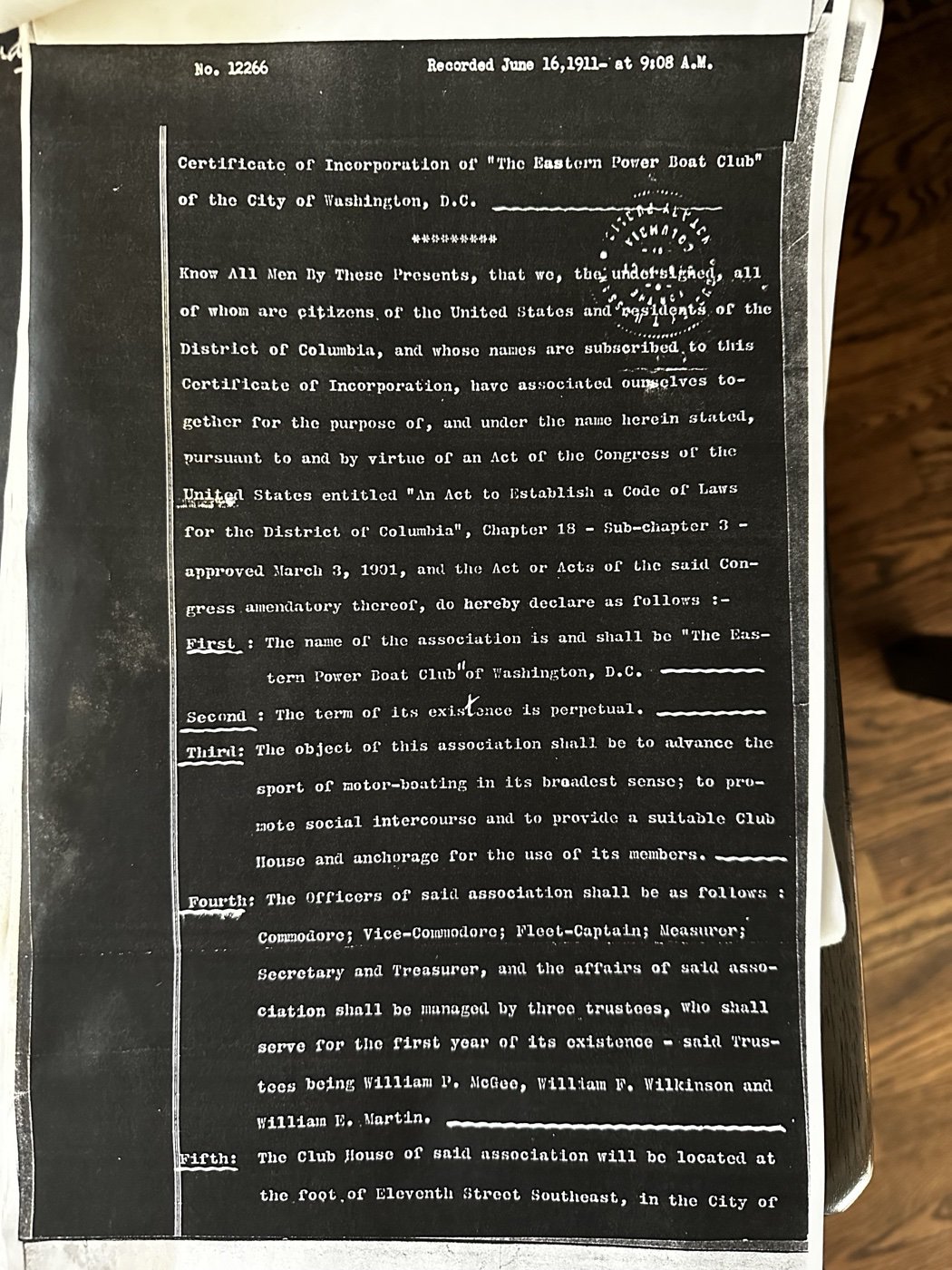
Founded in 1905, organized in 1910, and incorporated in 1911 “to advance the sport of motor boating in its broadest sense,” the Eastern Power Boat Club is the first boat club on the Anacostia and one of the oldest in America devoted entirely to motor boating.
For more than a hundred years this stretch of river has been home to a volunteer-run club built on a few simple things: a place to keep a boat without paying a fortune, a welcome for anyone who loves the water, and a stubborn loyalty to the Anacostia through its best years and its worst. Generations of members have called it home, on a waterfront that has changed almost beyond recognition.
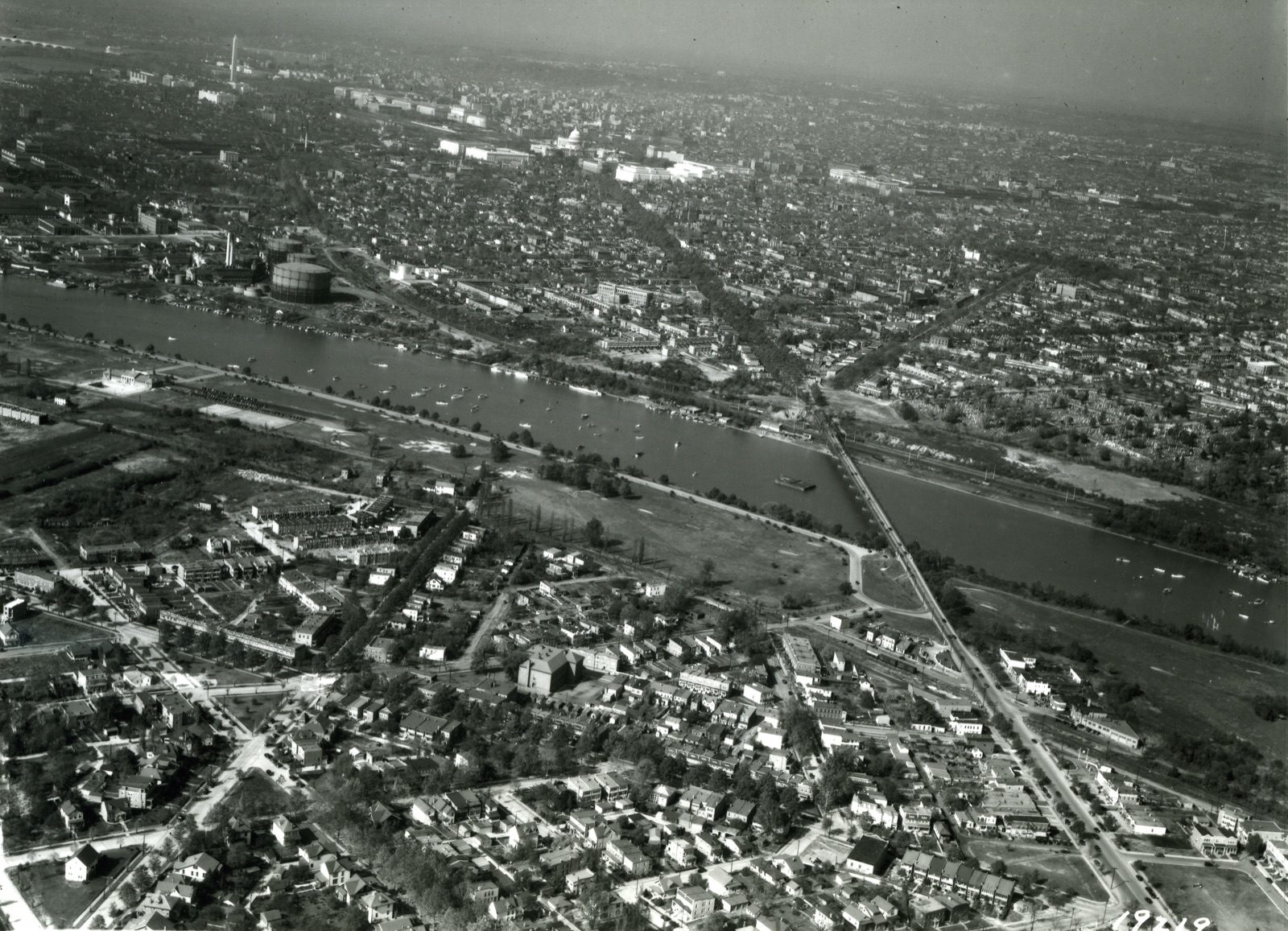
A river alive
In the club’s early decades the Anacostia, then still called the Eastern Branch, was a river alive with recreation. It was good fishing water, and the club itself grew out of a “hook, line and sinker gang” of anglers who found themselves sitting side by side near the Navy Yard, banded together, and turned to power boating. It was a swimming river too: the swimming holes along the bank were many and well populated, and every neighborhood child knew their names, Rutman’s beach, the Coal Chute, Ant beach, Glass beach, the Gas House Wharves.
And it was a boating river. As one 1925 sportswriter remembered, every kid in the Branch would beat it for deep water whenever Commodore Battenfield’s Gray Bat went by, just to “ride” the rollers it threw.
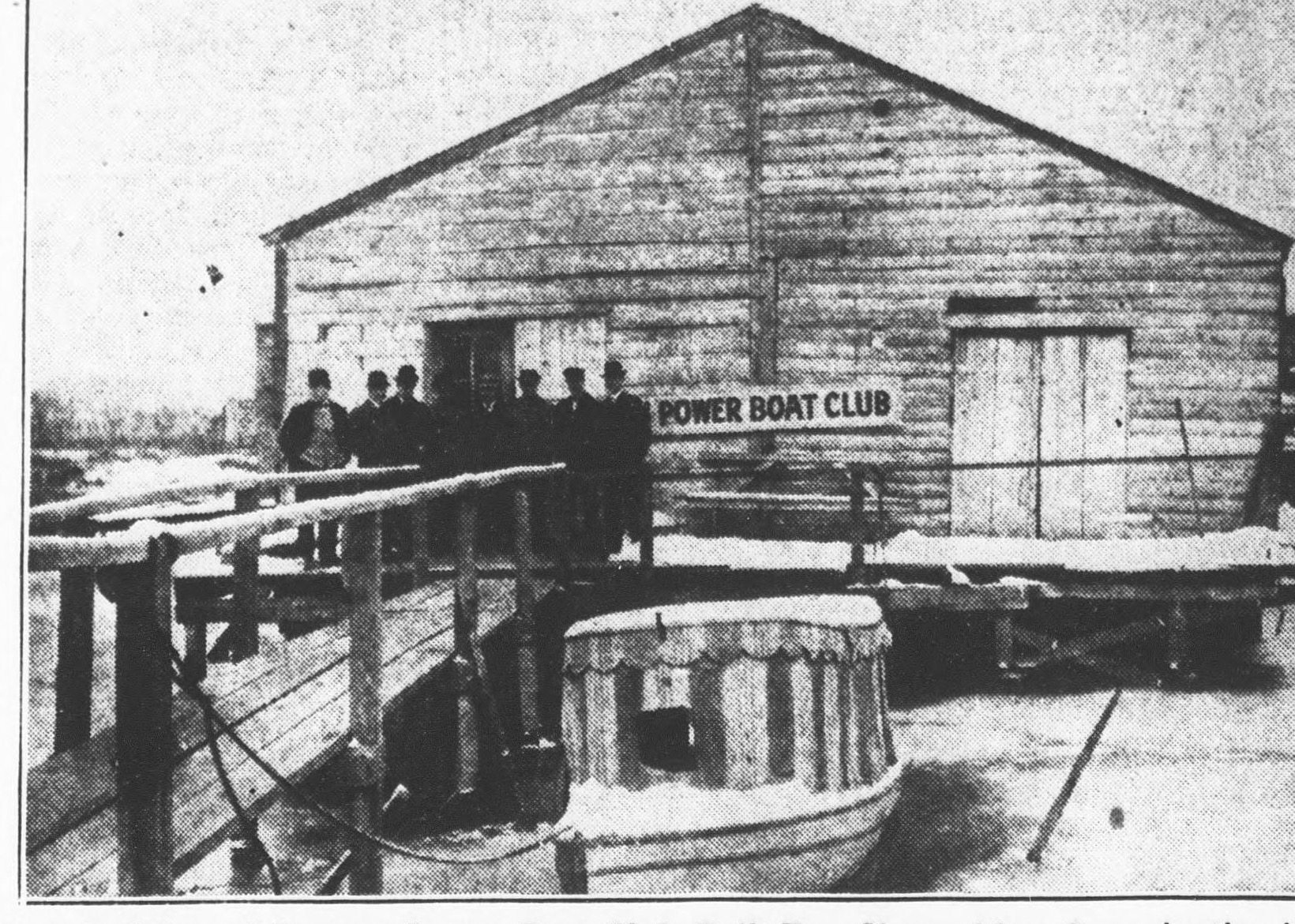
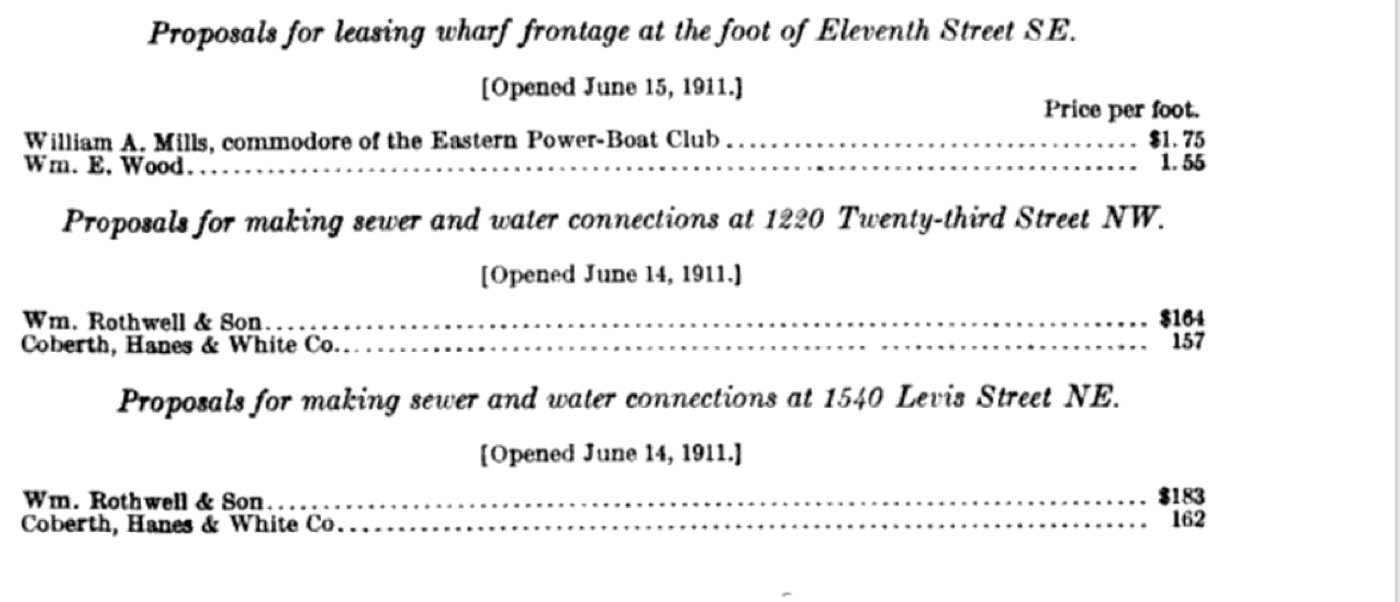
The club traces its founding to 1905. By the autumn of 1910 it had taken organized form: twenty “motorboat bugs” met on October 3, 1910, named themselves for the many motorboats kept on the river at the southeast edge of the city, and elected William A. Mills commodore. They built a first clubhouse at the foot of Eleventh Street Southeast, and on June 6, 1911 the club incorporated “to advance the sport of motor boating in its broadest sense.”
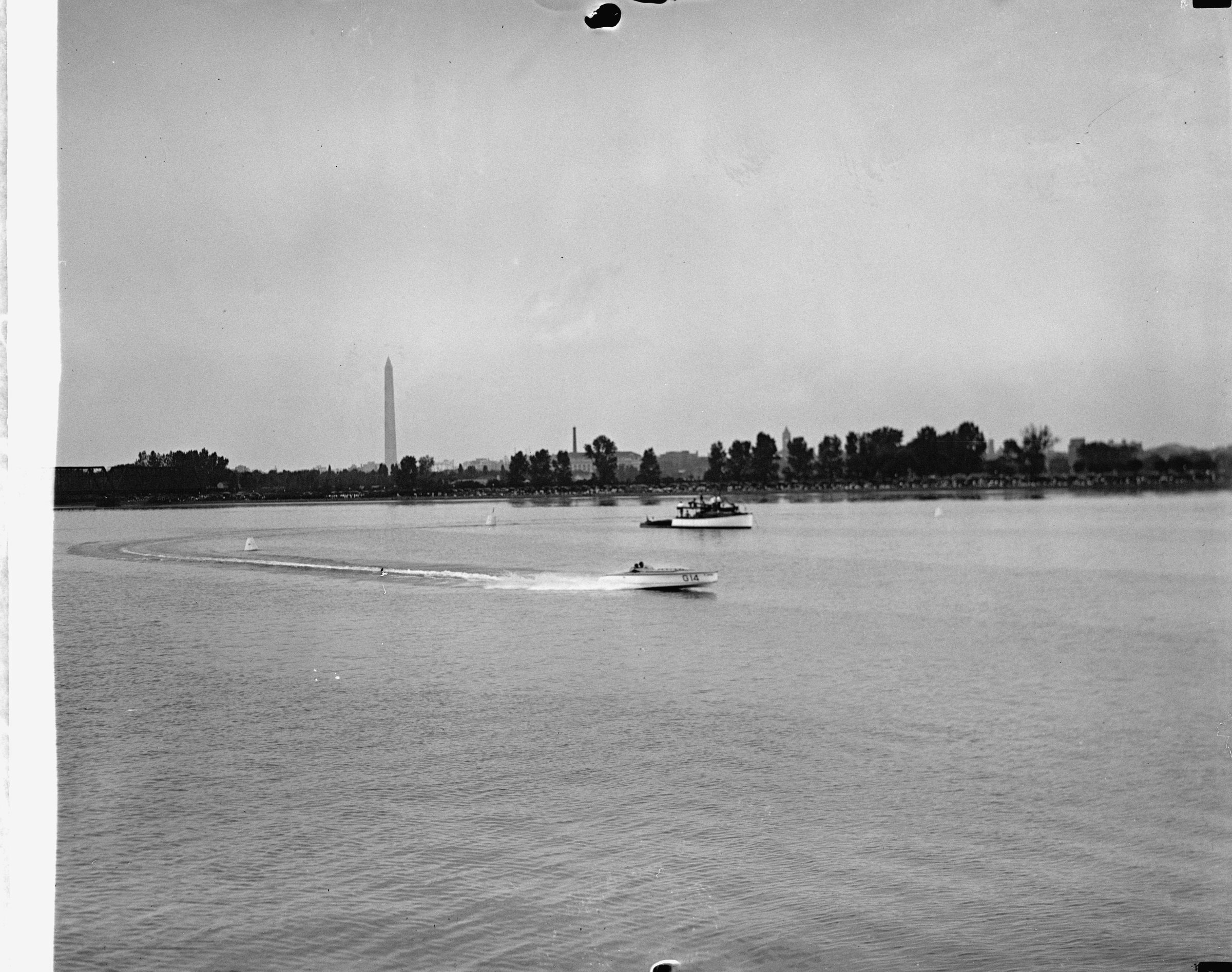
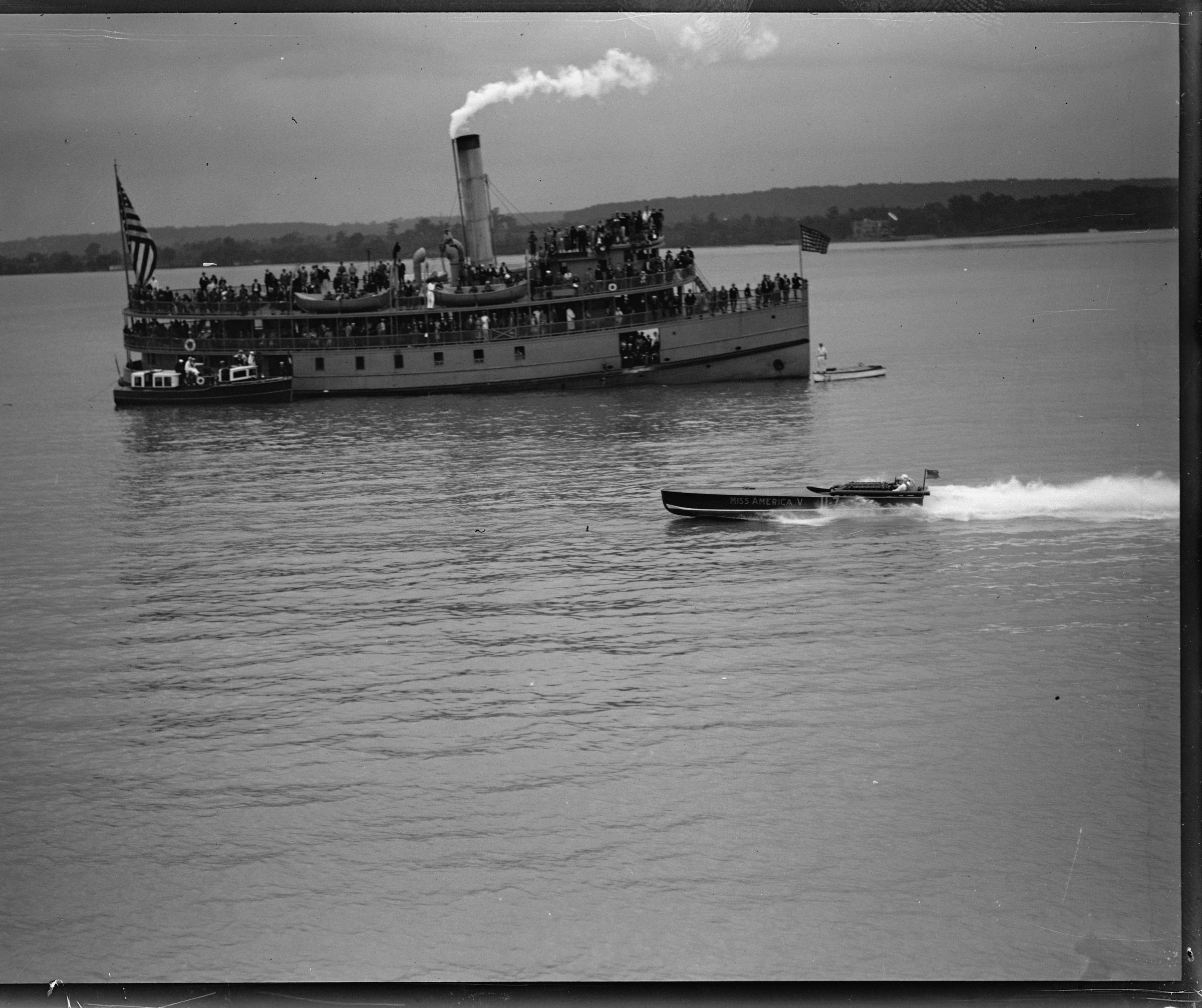
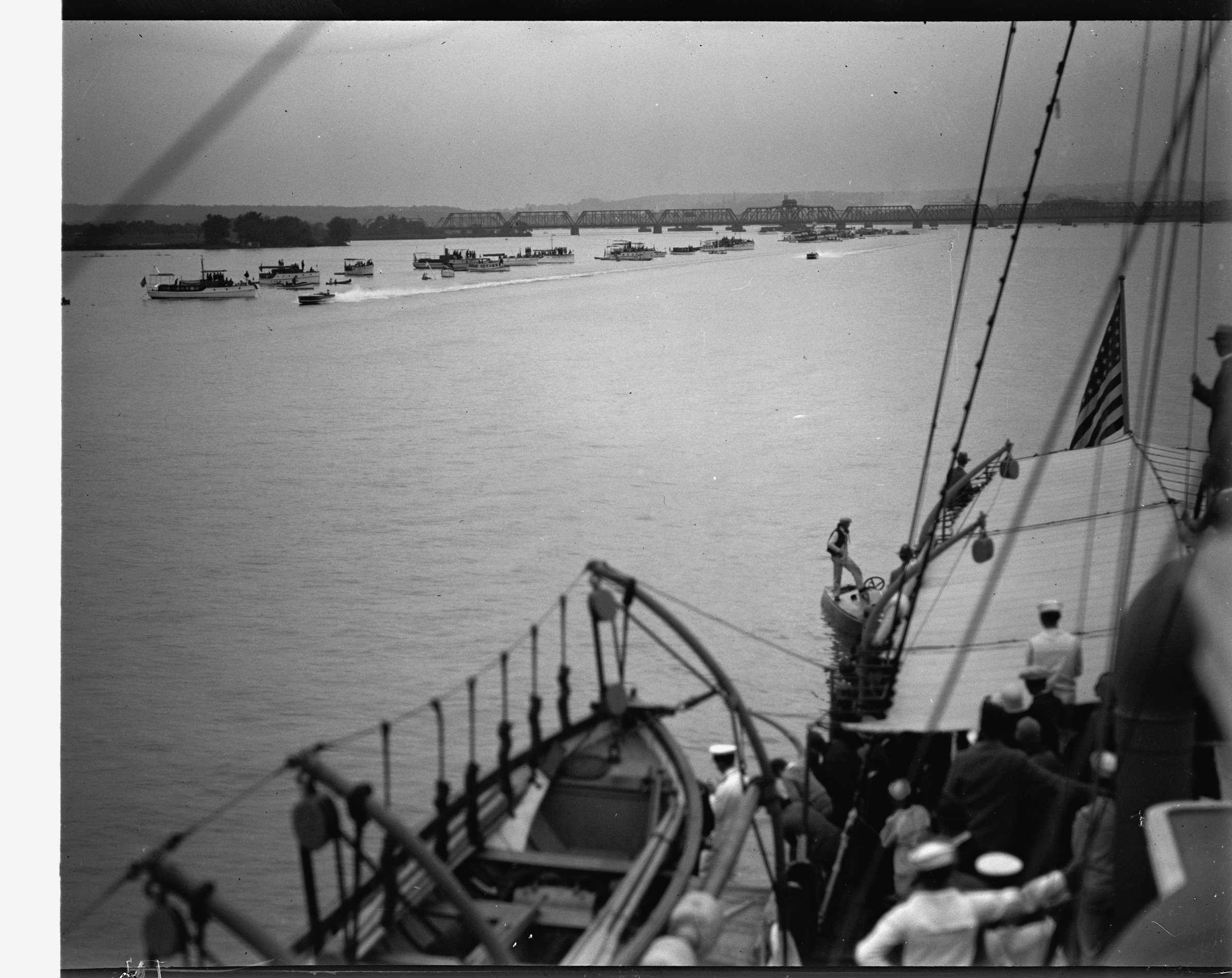
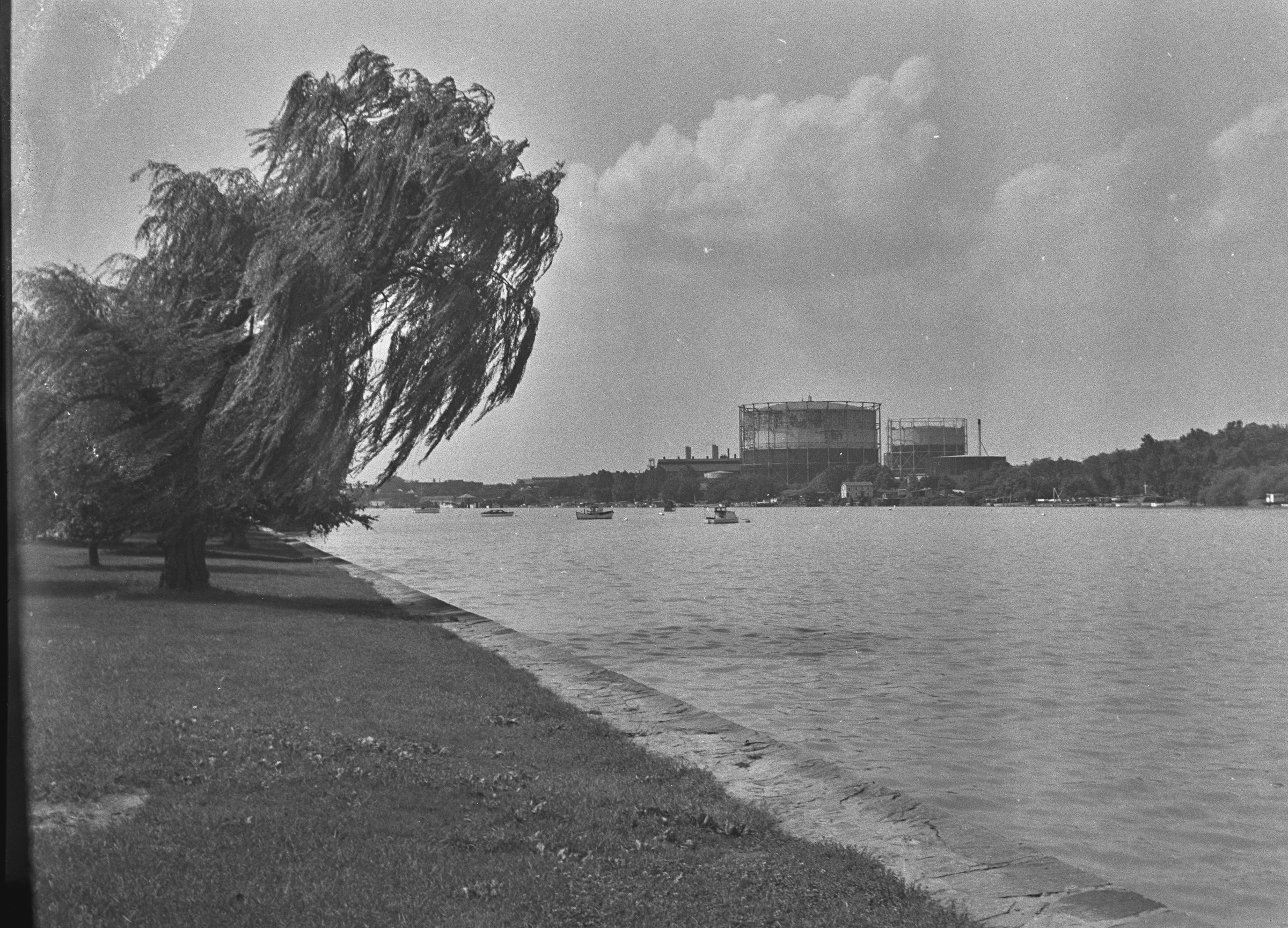
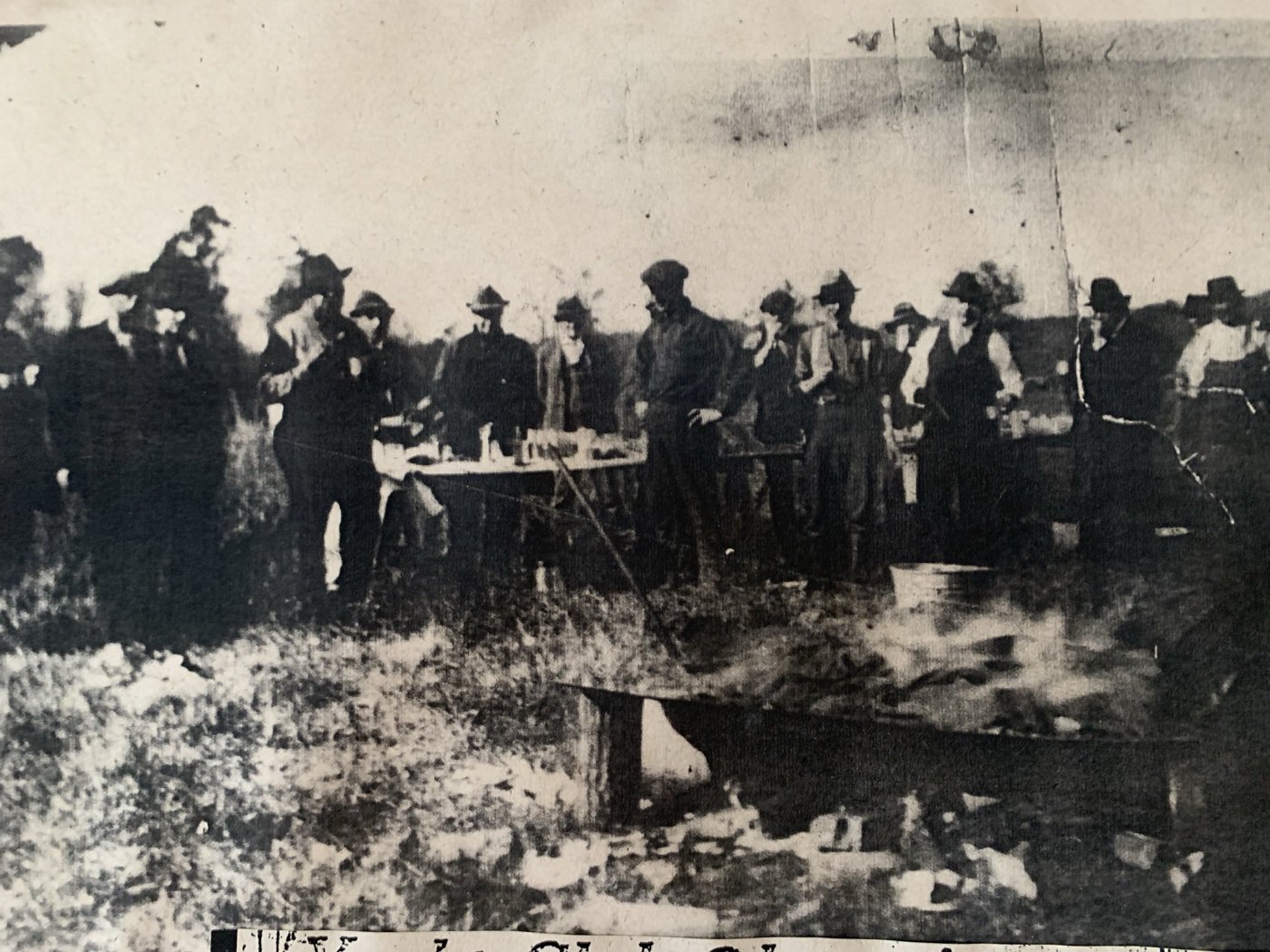
Powerboats racing on the Potomac in the club’s early years. The club’s members raced the wider Washington waters as readily as they ran the Anacostia they called home. Period photographs, from the club archives.
A working boater’s club, by design
From the start it was a club for working people who loved the water. While other Washington clubs catered to the wealthy, the club was built around affordability. Most of its members, by the club’s own thirtieth-anniversary account in 1933, worked at the nearby Washington Navy Yard, then the Navy’s great gun factory, building the naval guns that armed American warships through two world wars; others were brewery workers, tradesmen, and servicemen. They paid dues of fifty cents a month, and the club has kept that down-to-earth character ever since: a cooperative run by its own members, offering a home port on the river at a fraction of the cost of a high-end marina.
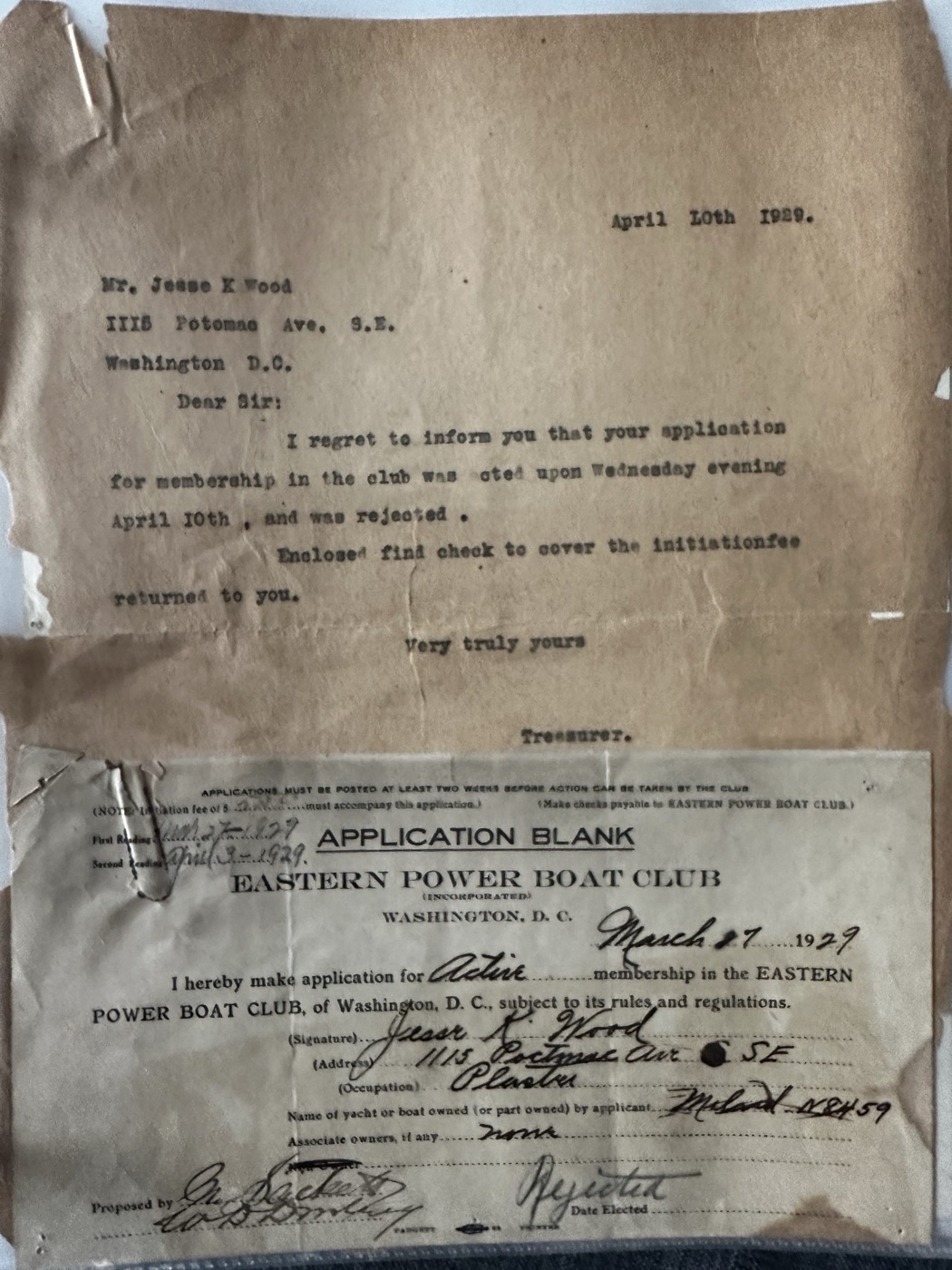
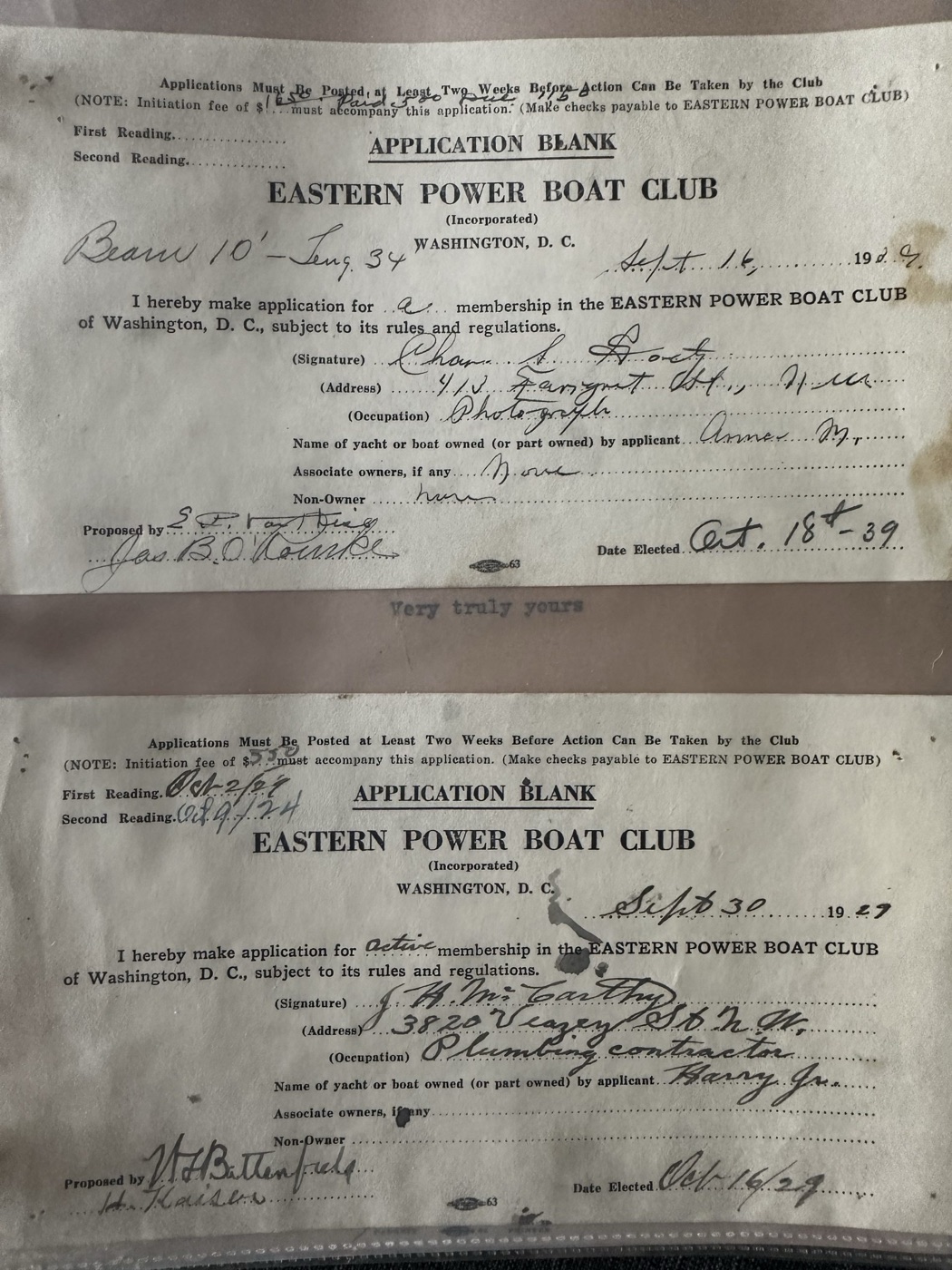
This was a club that did things for itself. A good many members built their own boats, from Commodore Battenfield’s racing hydroplanes to the member-made cabin cruiser La Minuet, working in the club yard through the winter. And they hauled them out for paint and repair on a marine railway the members laid themselves, a cradle and track running down into the river that the club has worked and maintained ever since.
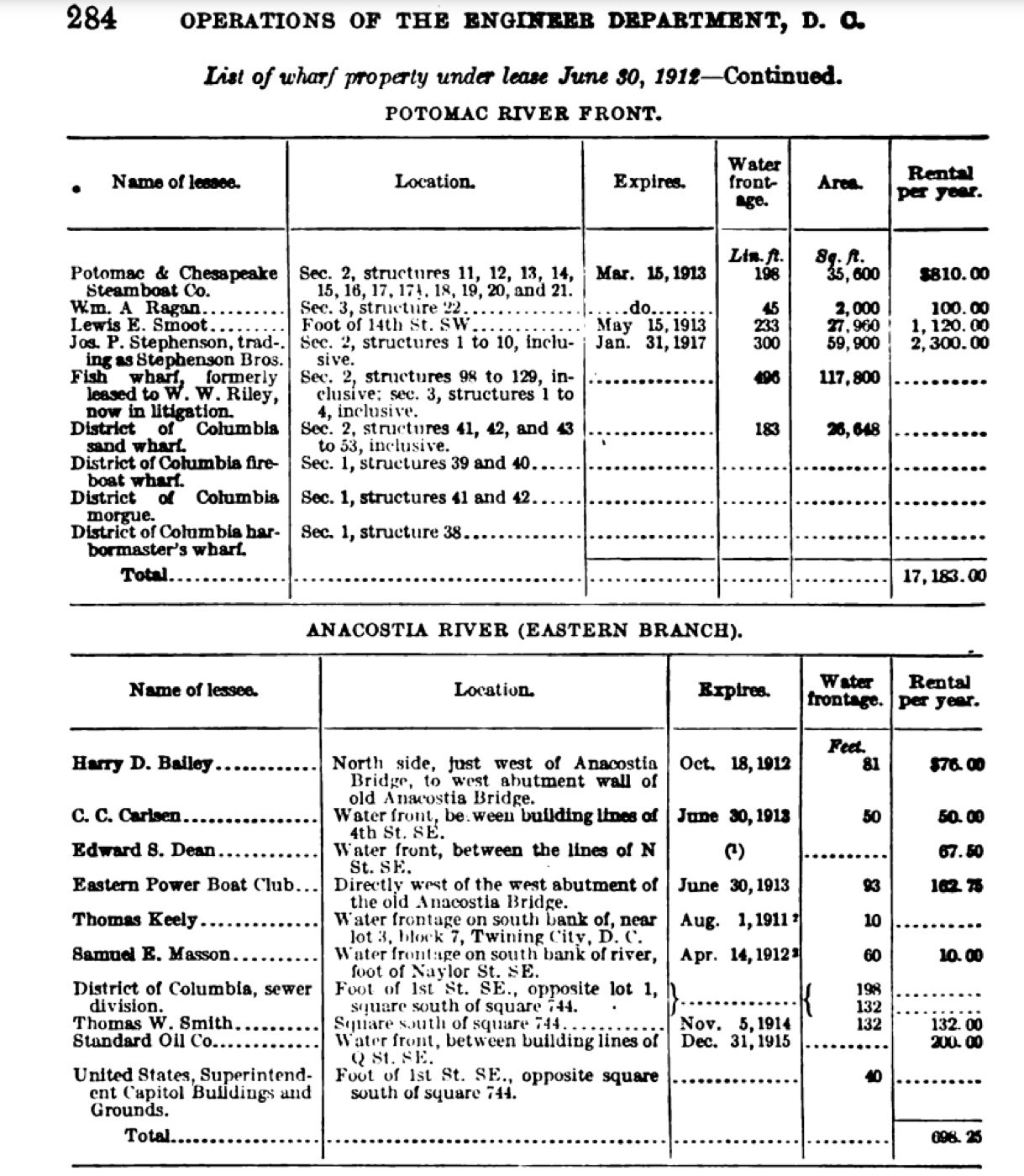
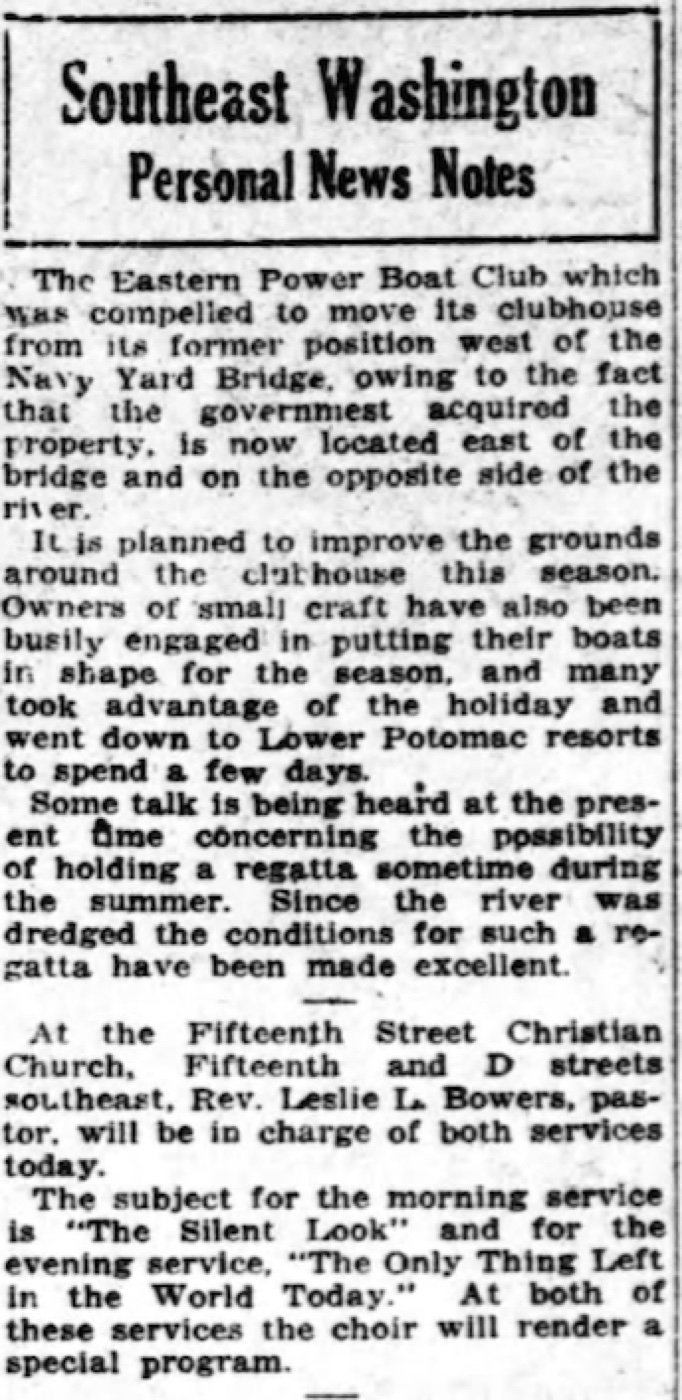
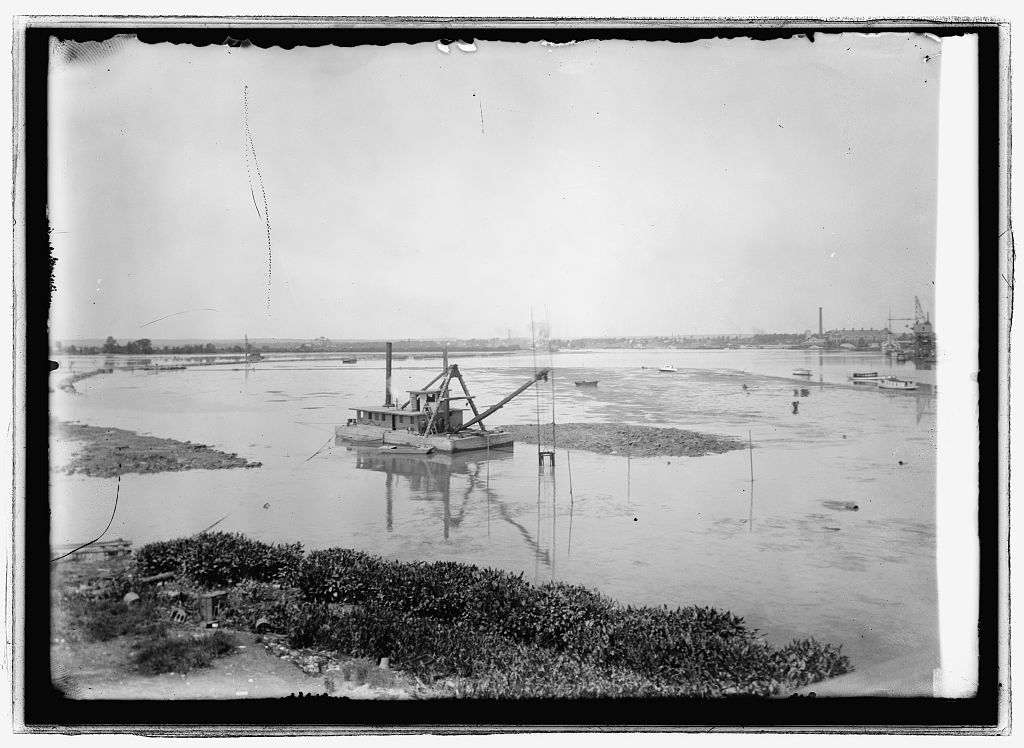
The club has had three homes on the same river. It began at the foot of the 11th Street Bridge, on ground that is now part of the Navy Yard. In 1919 it moved across to the east bank. By then the Army Corps of Engineers had already dredged and reclaimed the Anacostia Flats on that side, though the ground was not yet a park. It was the plans to build Anacostia Park on that reclaimed land, and the roads, water service, and other improvements they brought, that forced the club to move in 1924 to its present site on Historic Boathouse Row. The Washington Yacht Club, also on the east bank, had to move at the same time. The members built the site up by several more feet, and a turn-of-the-century winch from those years still works on the club’s marine railway today.
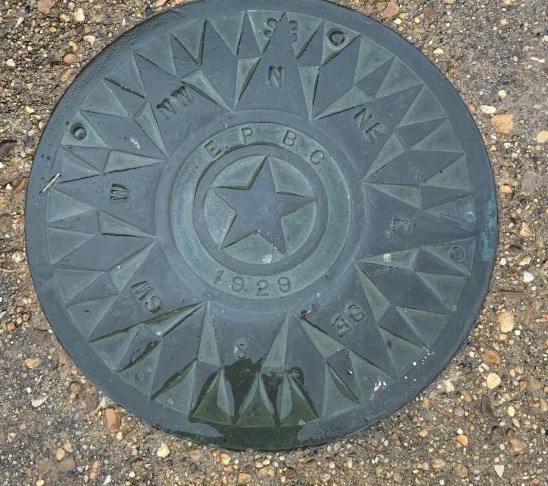
That move put the club on Historic Boathouse Row, the line of clubs that runs along Water Street on the Anacostia’s east bank. Four historic boat clubs share the row: Eastern Power Boat Club, the oldest, founded in 1905; the Washington Yacht Club, founded in 1910; the Seafarers Yacht Club, founded in 1945; and the District Yacht Club, founded in the mid-1950s, with the Anacostia Community Boathouse joining us in 2003. For more than a century these neighbors have shared the river and a common way of doing things, boating that is open, affordable, and run by its own members, and between them they have been the river’s steadiest stewards through all its years, good and bad.
The house the members built
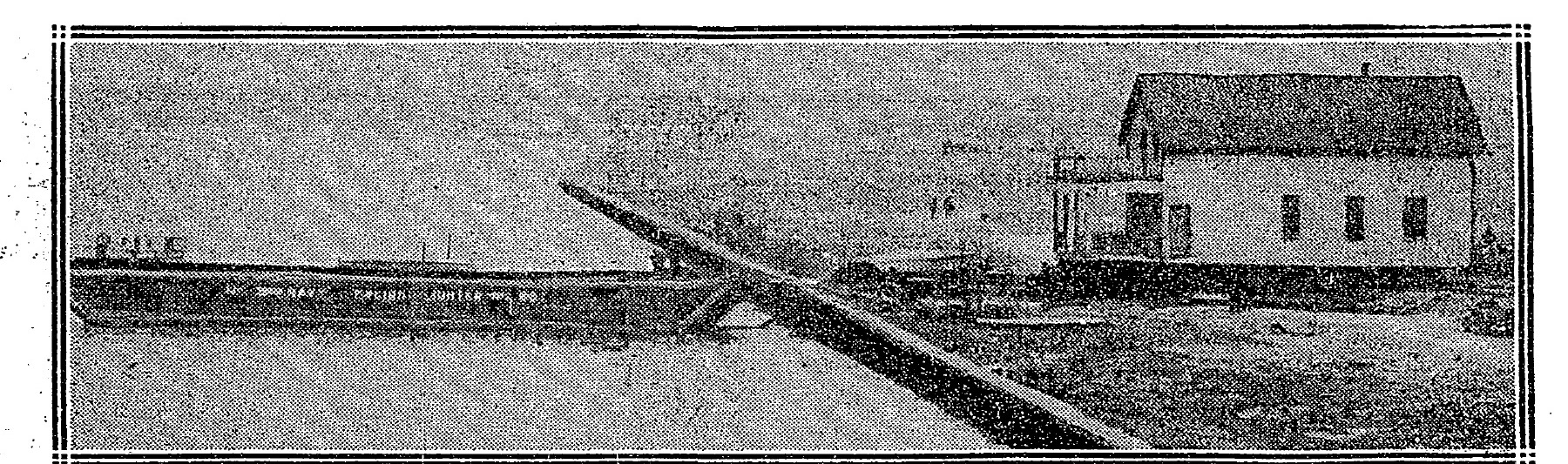
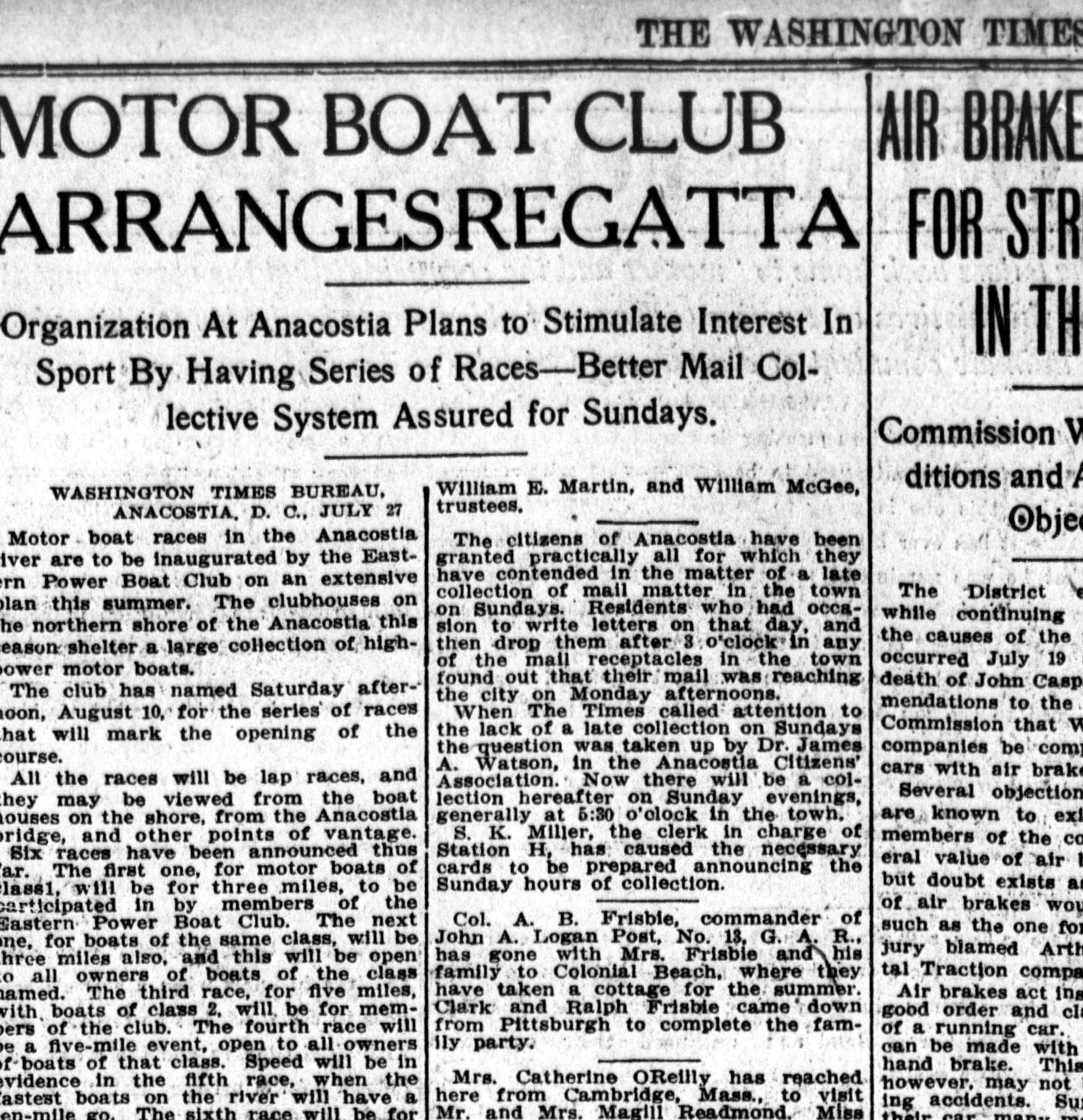
The club outgrew its first boathouse almost at once. Organized in the fall of 1910 by twenty men, it grew so fast that by July 1912 the Washington Times found the club’s dock sheltering “a large collection of high-power motor boats,” and the members already building something bigger: “a handsome frame boathouse, 30 by 40 feet, two stories high, with loft.”
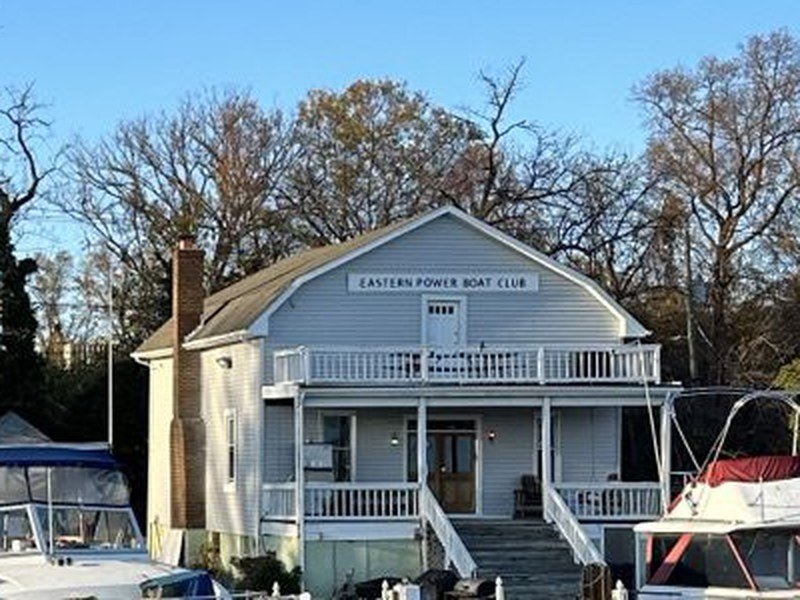
Our members built our current clubhouse in 1913, purpose-built for the club’s own life on the water: meeting facilities and a restroom downstairs, thirty-two member lockers upstairs, and an office. It has made every move with the members: floated across the Anacostia when the club left the foot of the 11th Street Bridge in 1919, then floated again in 1924 to its present home on Boathouse Row, where members raised the land several feet and placed the clubhouse on the foundation it sits on today. More than a century on, it still holds the club’s meetings, meals, and celebrations, and in 2011 the DC Historic Preservation Office determined it eligible for historic designation.
The house has kept its historic fabric to a remarkable degree: a tin ceiling overhead, heart of pine floors underfoot, and old-growth framing that has stood the test of time through more than a century of floods, moves, and Washington summers.
It is also a survivor. The Capital Yacht Club’s 1922 clubhouse on the Southwest waterfront, a classic of the type with its peaked roof and cupola, came down in 1969 in the urban renewal experiment that forever changed one of the oldest parts of DC, and the Corinthian Yacht Club’s was demolished in the same decade after the Department of the Interior cancelled its dock lease. Across the Potomac River in Alexandria, the Old Dominion Boat Club’s 1921 clubhouse was demolished in 2018 to make way for a waterfront park. Georgetown’s historic paddling clubs still keep their early boathouses on the Potomac, the Washington Canoe Club’s of 1905 and the Potomac Boat Club’s of 1908.
On Boathouse Row itself, Eastern’s clubhouse is the senior building. The District Yacht Club’s clubhouse, reportedly a former Army building floated to its site, was lost to fire in 2016. The Seafarers Yacht Club built its present clubhouse, with its pilothouse windows looking out on the river, in 1964. And the Washington Yacht Club’s, raised by its members in 1915 and barged across the river in 1925, is the nearest in age, two years younger than Eastern’s. That makes the 1913 clubhouse the oldest purpose-built clubhouse still standing on the Anacostia’s Boathouse Row.
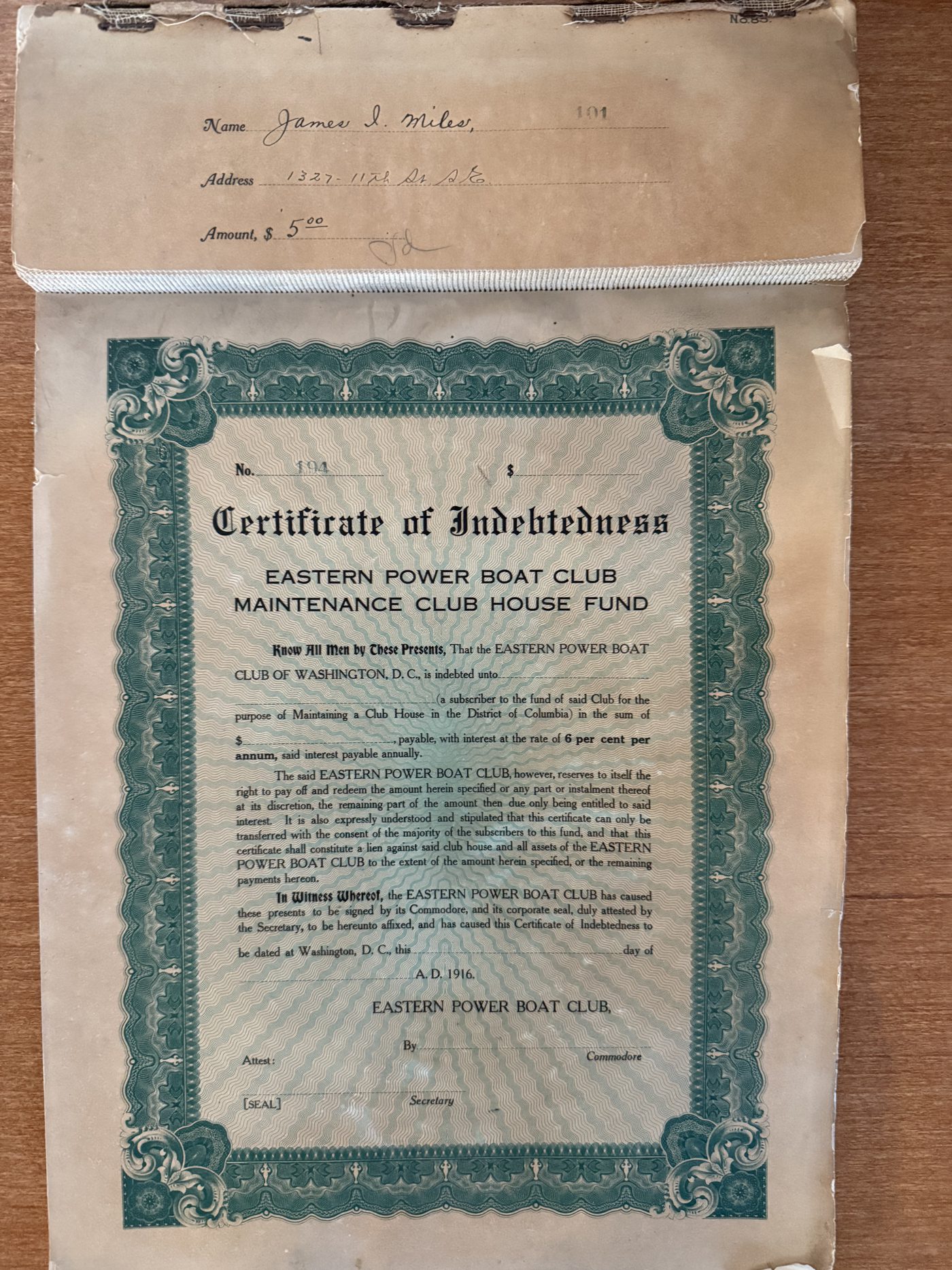
The members paid for all of it themselves. From 1916 into the 1930s the club raised funds for capital improvements by issuing Certificates of Indebtedness to its own members through the Maintenance Club House Fund. A member subscribed what he could, often five dollars at a time, and the club promised the money back with interest at six percent a year. Those small subscriptions carried the club’s capital work for a generation, the clubhouse’s two trips across the river included.
That arrangement says a great deal about the club, then and now. Eastern has always been self-funded: built, maintained, and paid for by its own members, without taxpayer money, from the first clubhouse to the docks of today.
Speed on the Potomac
The club was built for boaters who wanted to run. Racing was written into its by-laws, which called for “such regattas and races as the Regatta Committee, with the approval of the Club, shall decide.” The club ran with the Chesapeake chapter of the American Power Boat Association, holding sanctioned races in the smaller classes, and its boats, the Jolly Roger among them, raced the Potomac and the Chesapeake.
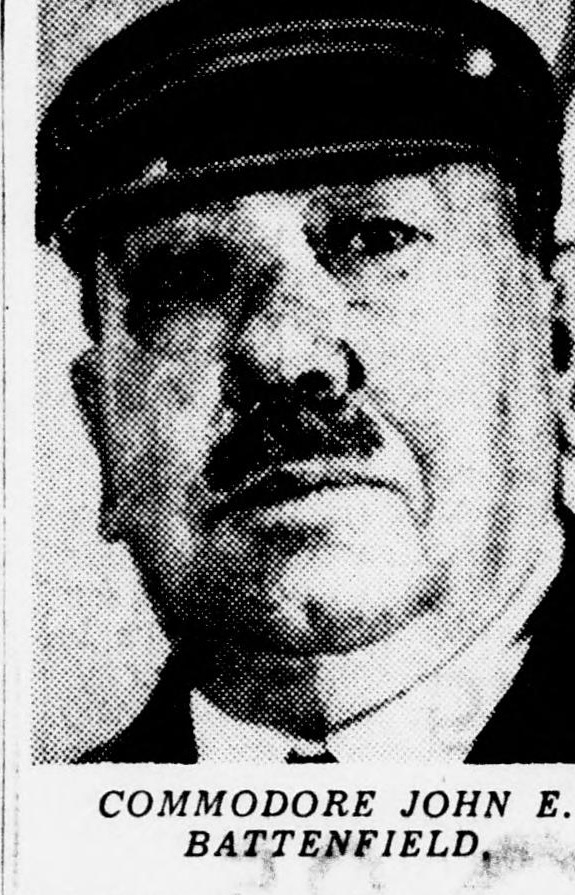
At their head was Commodore John Battenfield, an award-winning racer who took home some thirty trophies. His legendary Gray Bat was once recognized as the fastest boat on the East Coast, the fastest craft on the Atlantic seaboard in its day.
From 1926 its members also helped run the Presidents Cup, the big powerboat regatta that drew unlimited hydroplanes to Washington every September into the 1970s. The club’s people were officials and organizers as much as drivers. Bruce Wallen, a member who owned his own boat, was still at it at the start of the 1960s, serving as an official of the Capital Power Boat Association and assisting the chairman of the Presidents Cup.
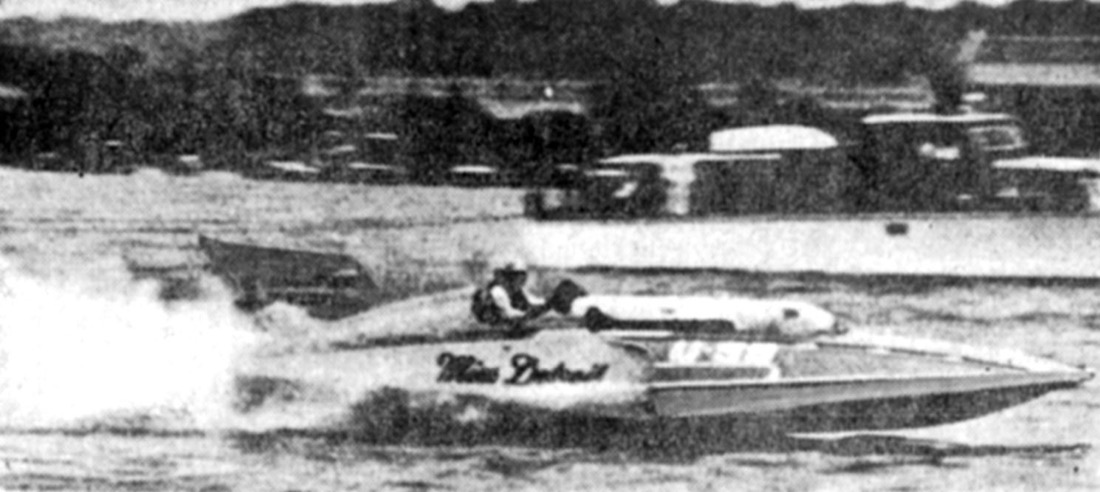
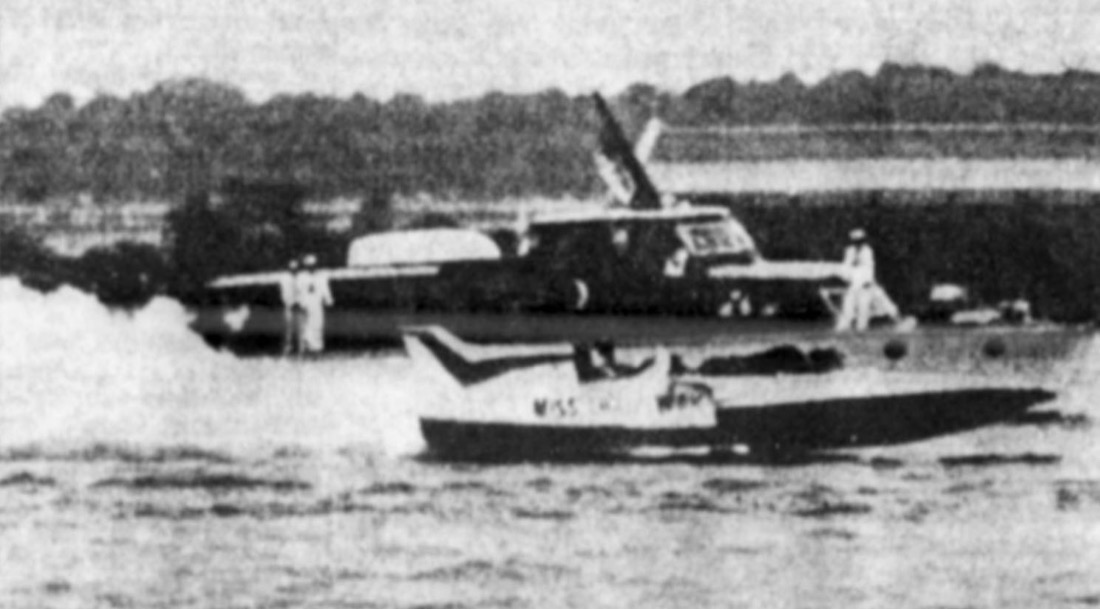
The disputed 1960 Presidents Cup. Off Hains Point on the Potomac, Bill Muncey’s Miss Thriftway (right) crossed first but was ruled to have jumped the gun, handing the Cup to Chuck Thompson’s Miss Detroit (left). The unlimited hydroplanes were the headline act; the club’s members were among the officials and volunteers who ran the regatta. Left: United Press International Telephoto. Right: AP Wirephoto. Via Hydroplane History.
From tradesmen to congressmen
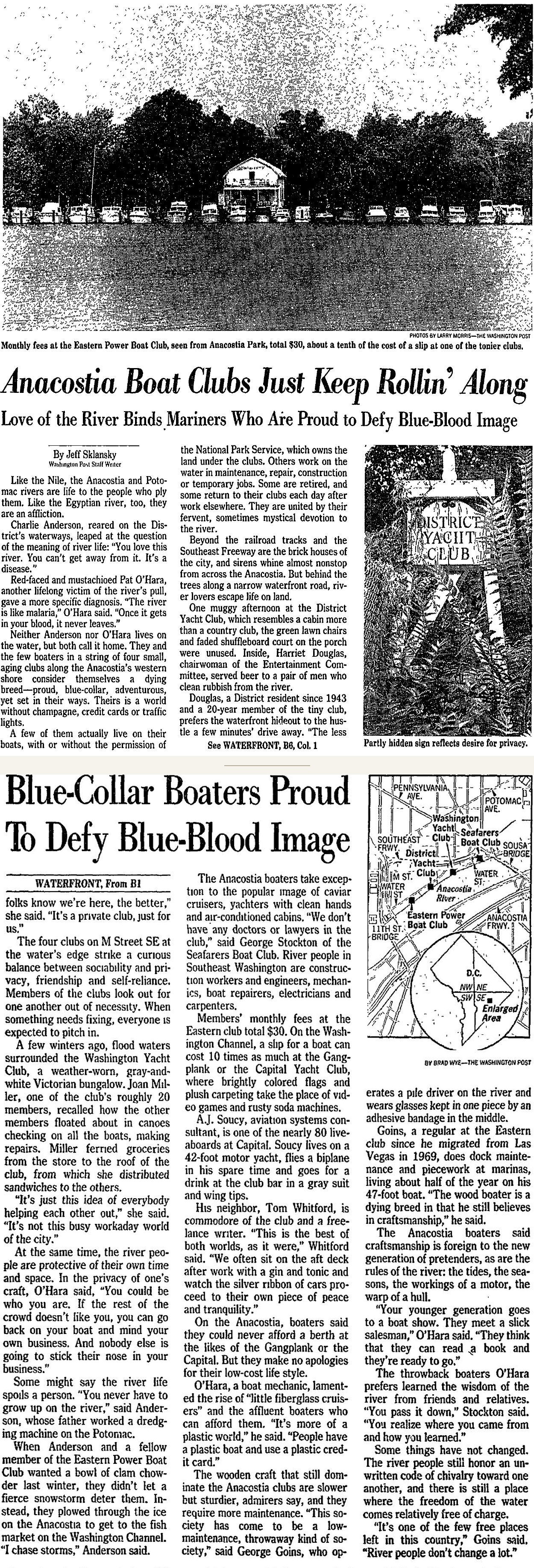
From the 1970s into the 2000s, the better part of three decades, the club was led by its longtime commodore, J.R. Taylor, and it prospered under him. For all its racing silver, it never lost the working-class character it started with. A 1988 Washington Post feature on the blue-collar boat clubs of the Anacostia put the club front and center, proud to defy the blue-blood yacht-club image, with monthly fees of about thirty dollars, roughly a tenth the cost of a slip at the tonier clubs.
The membership ran the full range of the city, from tradesmen to White House executive staff to several sitting members of Congress. On Commodore J.R. Taylor’s decades at the helm, 1970s–2000s
That mix could make for unlikely company. Congressman James Traficant of Ohio kept his powerboat at the club, and it surfaced in the federal corruption case that ended with his conviction on ten felony counts and his expulsion from the House in 2002.
Weathering the century
A hundred-odd years on one river means weathering everything a century can bring. The club came through the Great Depression intact: by its thirtieth anniversary in 1933 it counted sixty-eight members and a fleet of about forty, with J. E. Battenfield in his twelfth year as commodore. It came through the World Wars, floating the clubhouse on pontoons during one of them and sending members like James Barry O’Rourke into the Coast Guard. It even came through disaster closer to home, when a propane tank being used to rebuild a van in the club yard blew up in 1978, knocking out windows but hurting no one.
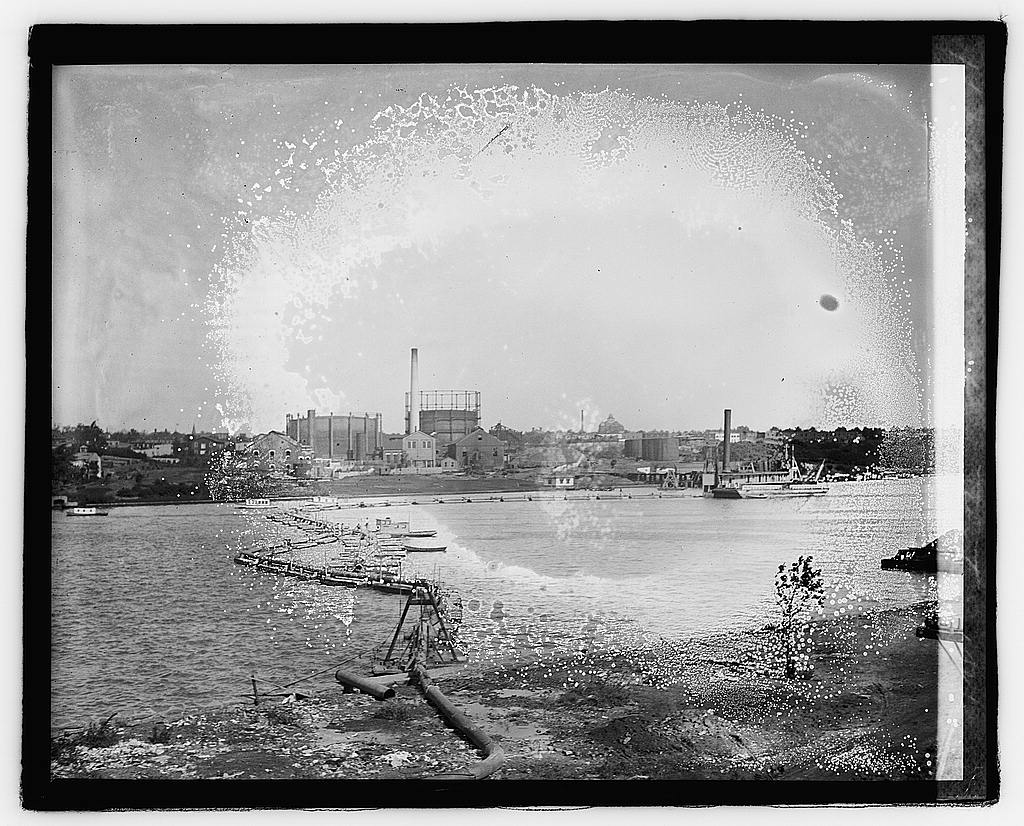
The hardest loss was the river itself. The same reclamation that built the club’s ground erased the old swimming beaches, and for much of the twentieth century the Anacostia carried the District’s stormwater and sewage along with the runoff of the industry on its banks. Upstream, stretches of the riverbank were used as a landfill, and riverside oil depots and gas works fouled the water and the ground around them. By 1971 swimming was banned outright, and the river was counted among the most polluted in the country.
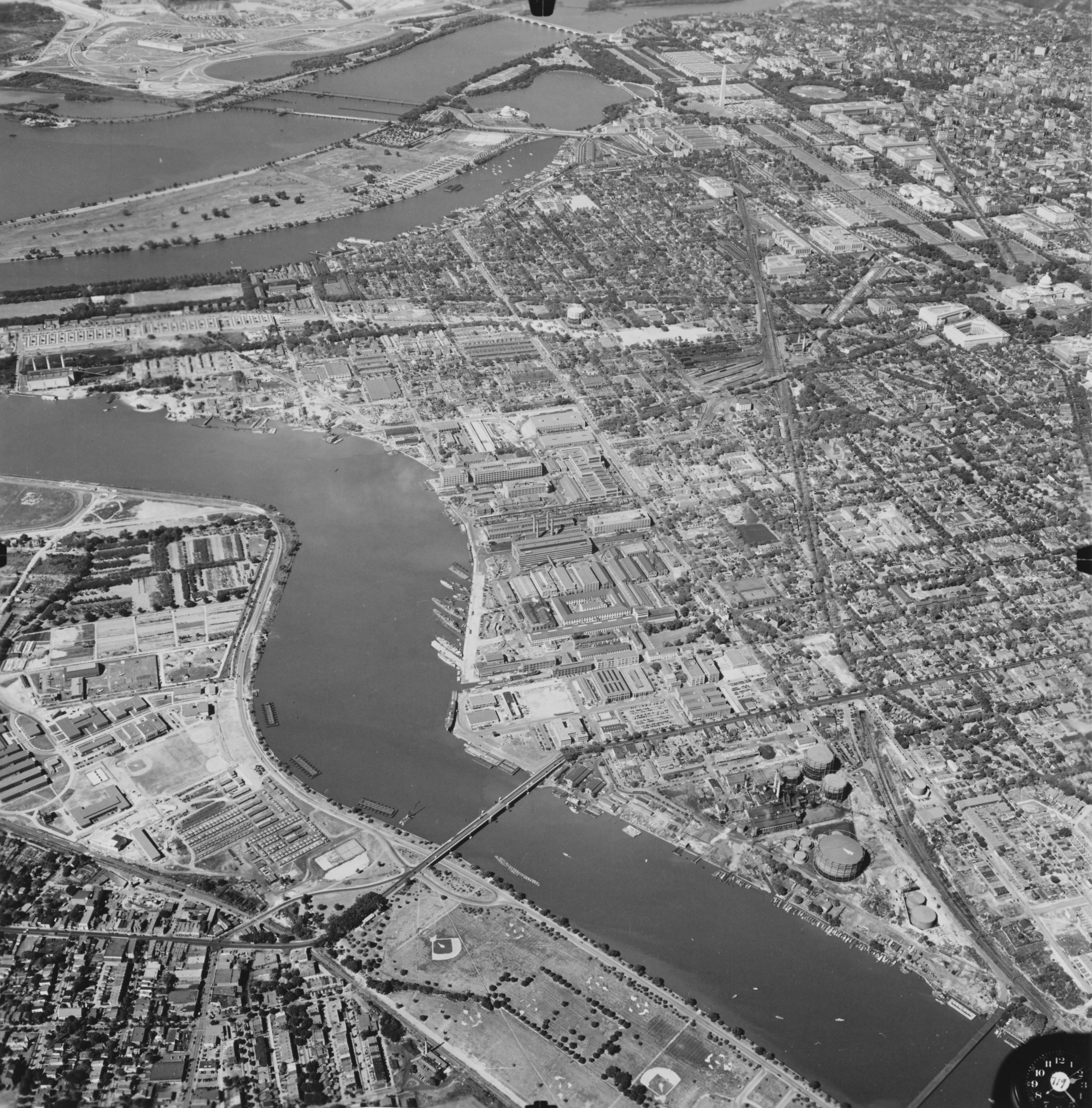
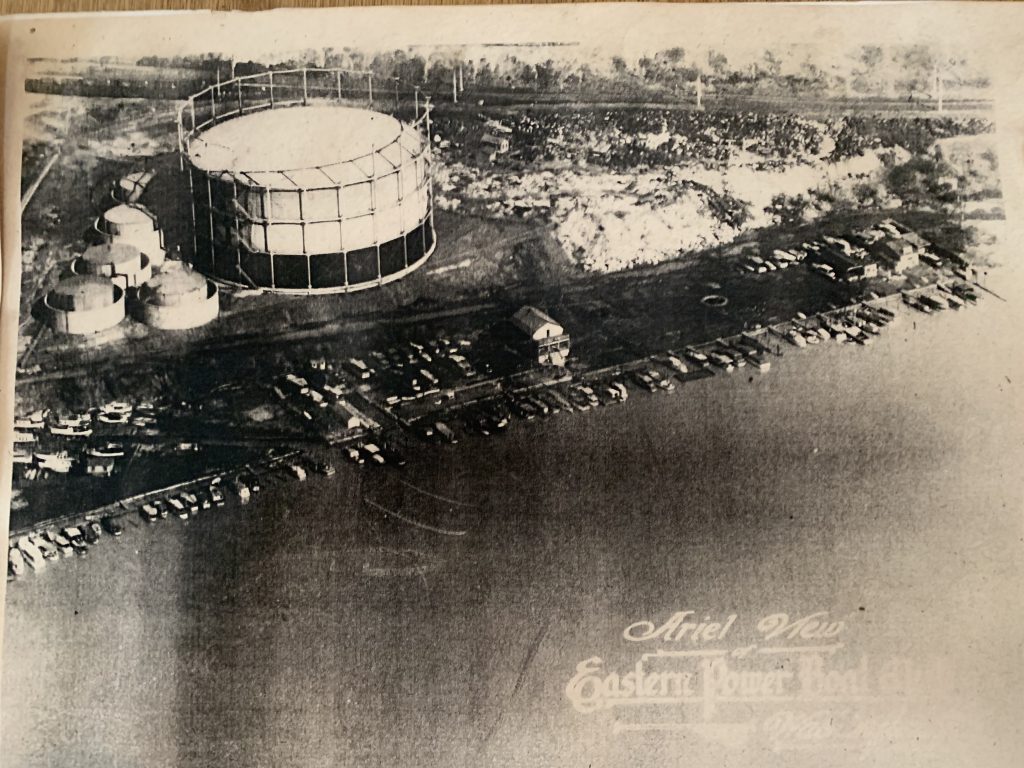
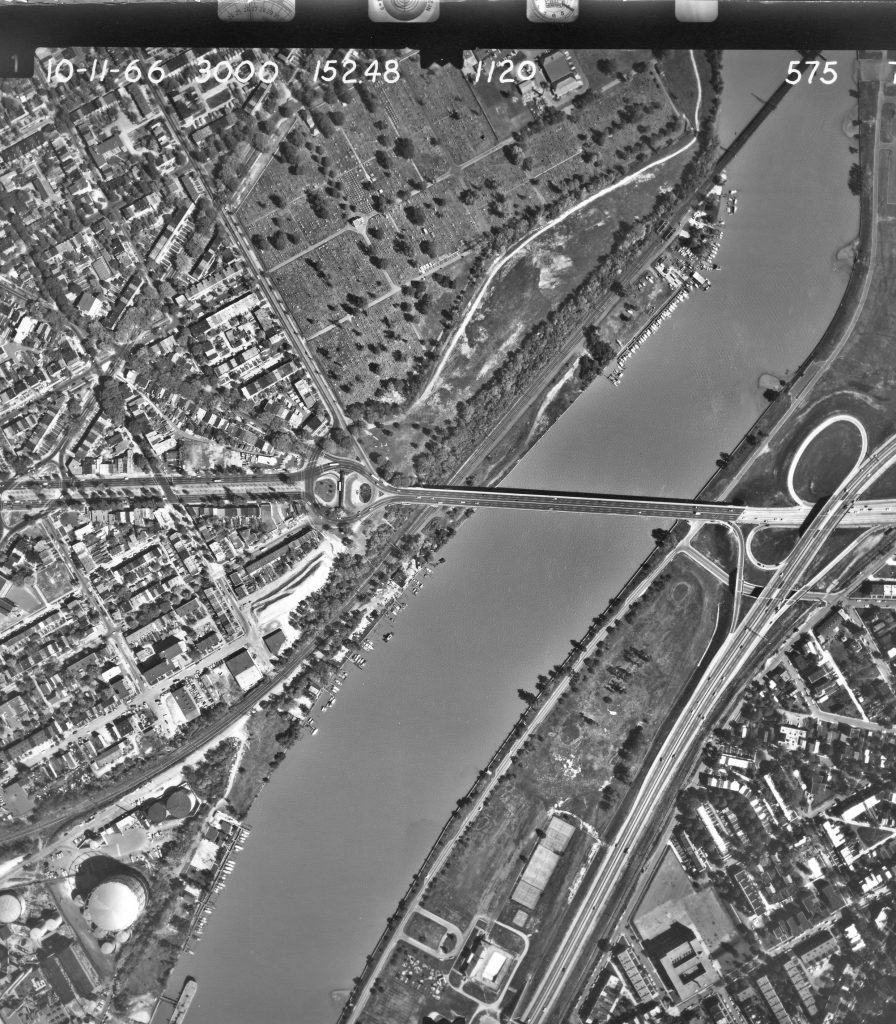
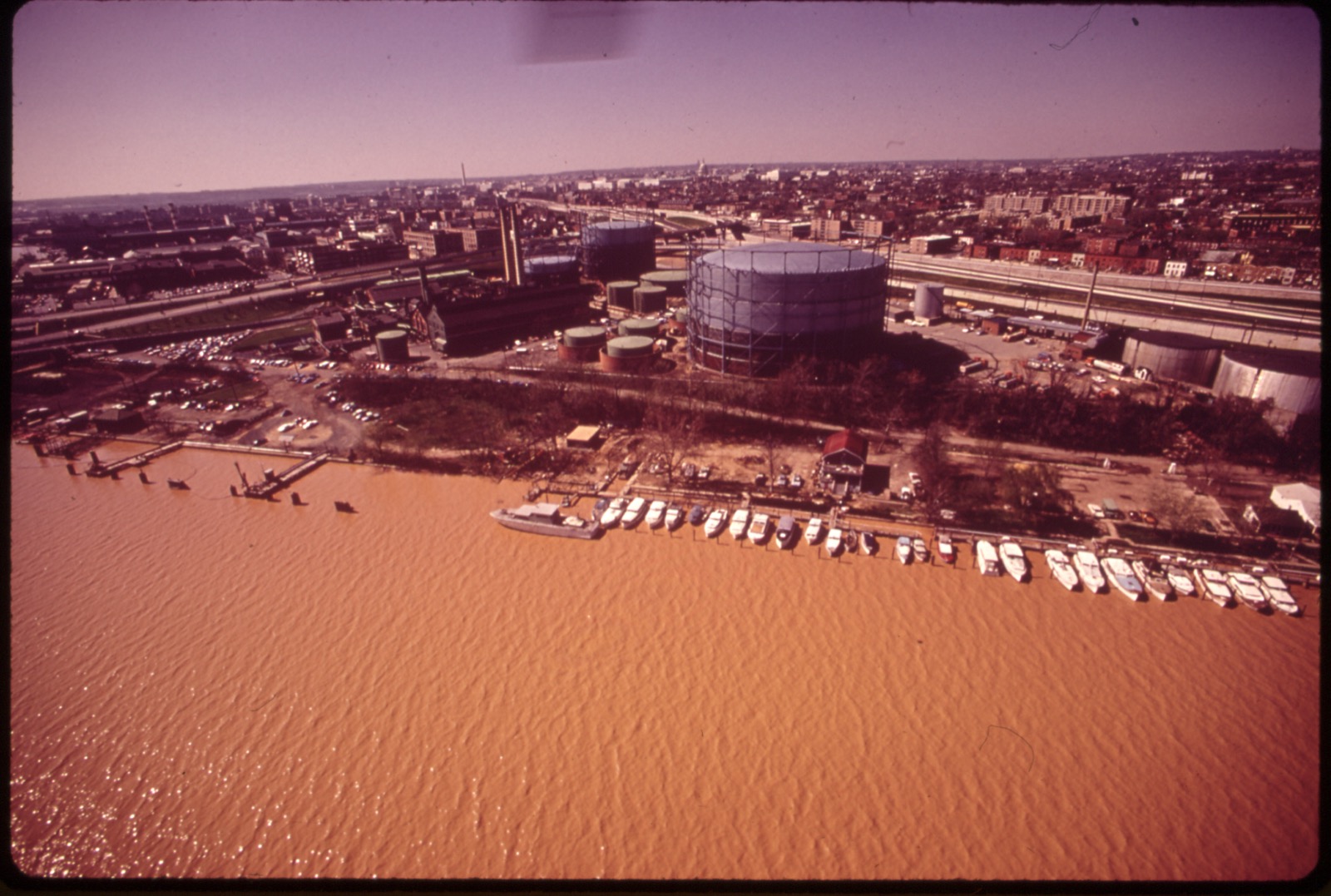
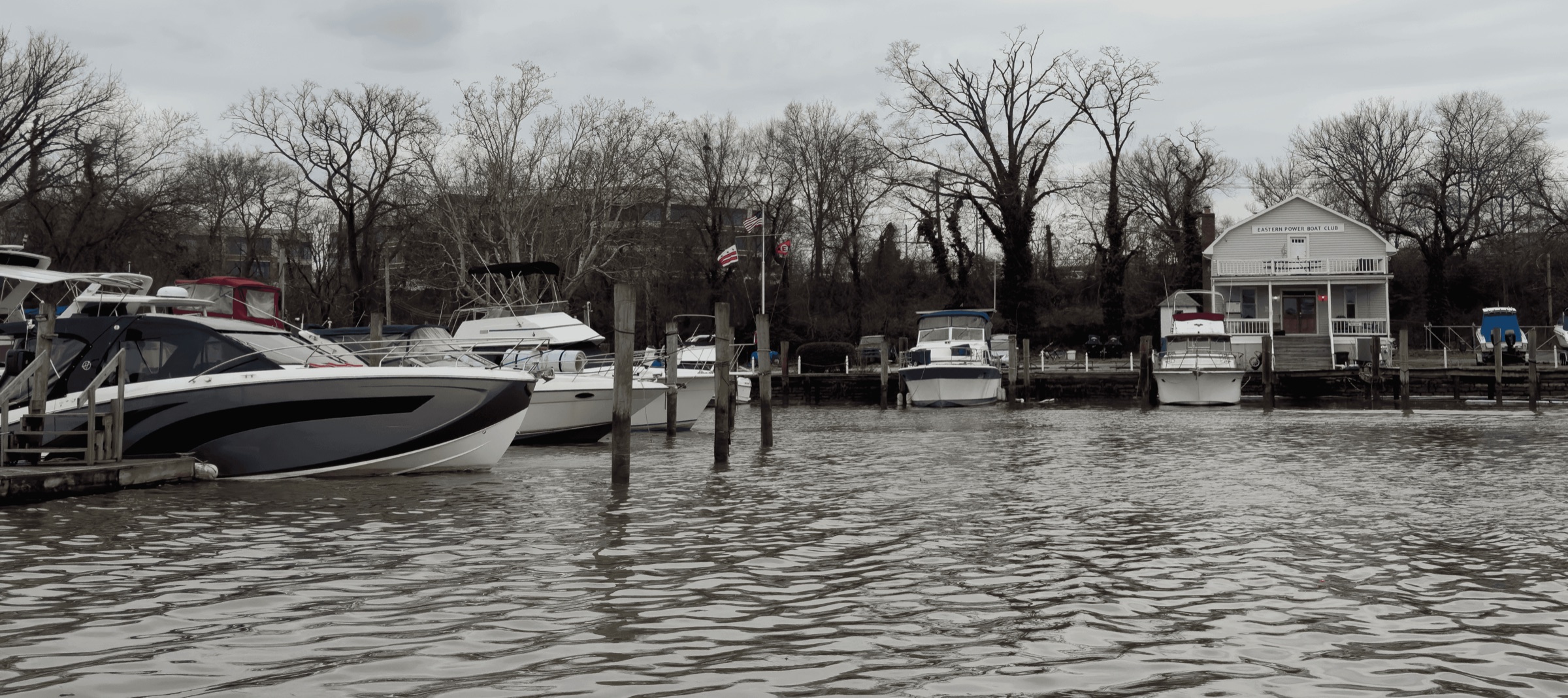
The Anacostia has come a long way back since the late 1980s, with cleaner water and a revived waterfront. The river’s neighbors were part of that turnaround from the start: in 1985 Howard Gasaway of the Seafarers Yacht Club, the country’s oldest African American yacht club and a fellow Anacostia club just up the row, founded the annual Anacostia River Earth Day cleanup in partnership with Mayor Marion Barry, now one of the largest single-day volunteer events in the region. The club is glad to carry that work forward, hosting an Earth Day cleanup at the club and joining shoreline cleanups through the season.
The river's recovery, the partners the club works with, and the environmental history of this stretch of the Anacostia have a page of their own: see River Stewardship.
Milestones on the river
- The National Park Service transfers the historic Boathouse Row land, the club’s site included, to the District of Columbia.
- The Anacostia Riverkeeper is founded and becomes a valued partner on the river, watching over water quality, running cleanups, opening the water through free boat tours and Friday-night fishing, and clearing abandoned and derelict boats from the Anacostia.
Documents and photographs from the early years
The club holds a deep archive of early photographs, press clippings, leases, and records. A selection from the founding decades is below.
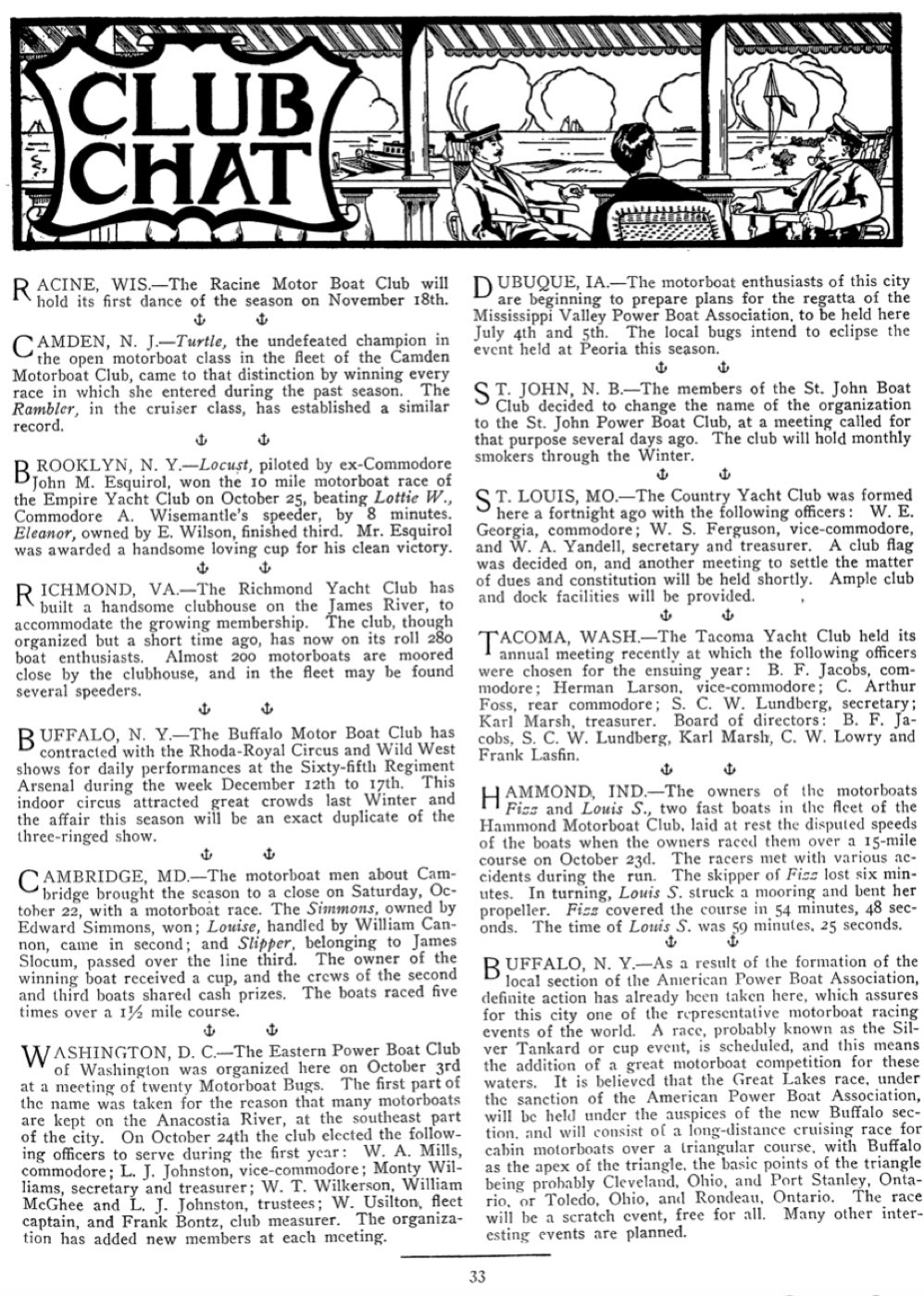
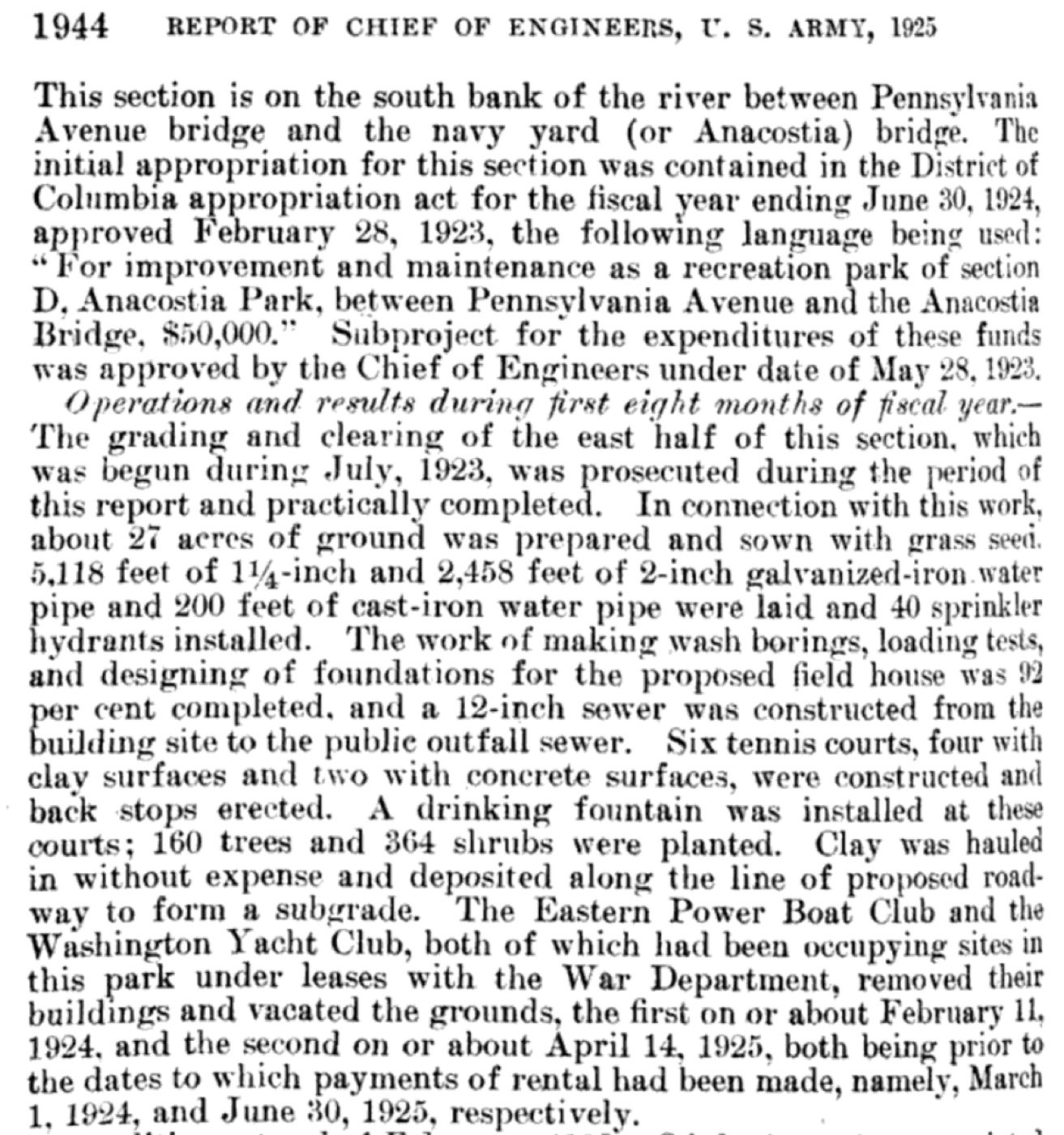
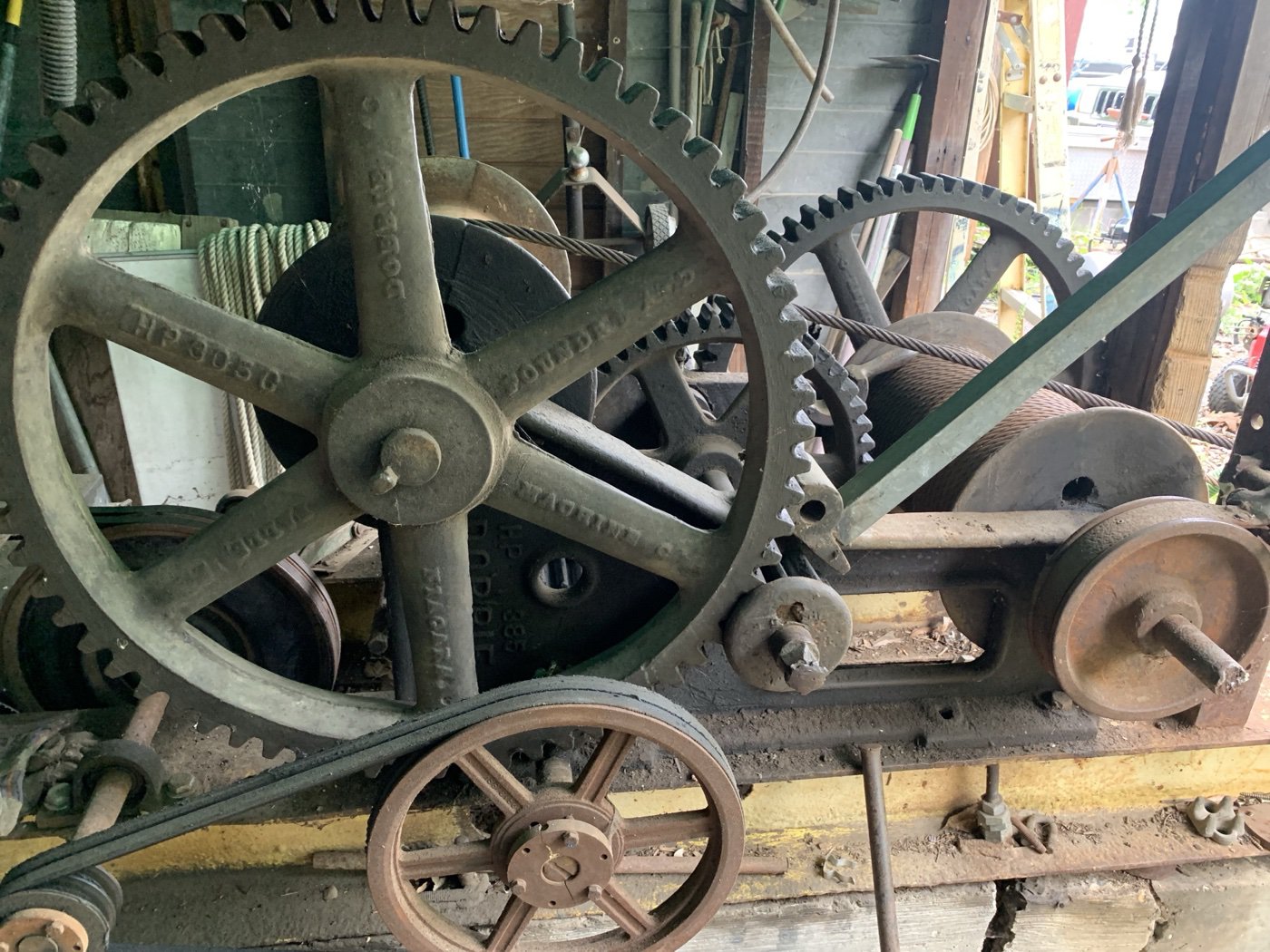
Historical details on this page are drawn from the club’s own records and history page, together with the historic-preservation record of Boathouse Row: the “Historic Boathouse Row” river-tour guide (2008), the Washington Yacht Club National Register and DC Landmark application (2019), and the Washington Yacht Club’s history of Historic Boathouse Row.
A century in the papers
For more than a century the club has turned up in the Washington papers, from its founding notice in a national motorboating journal to feature stories and the occasional bit of waterfront drama. Two from the archive are below.
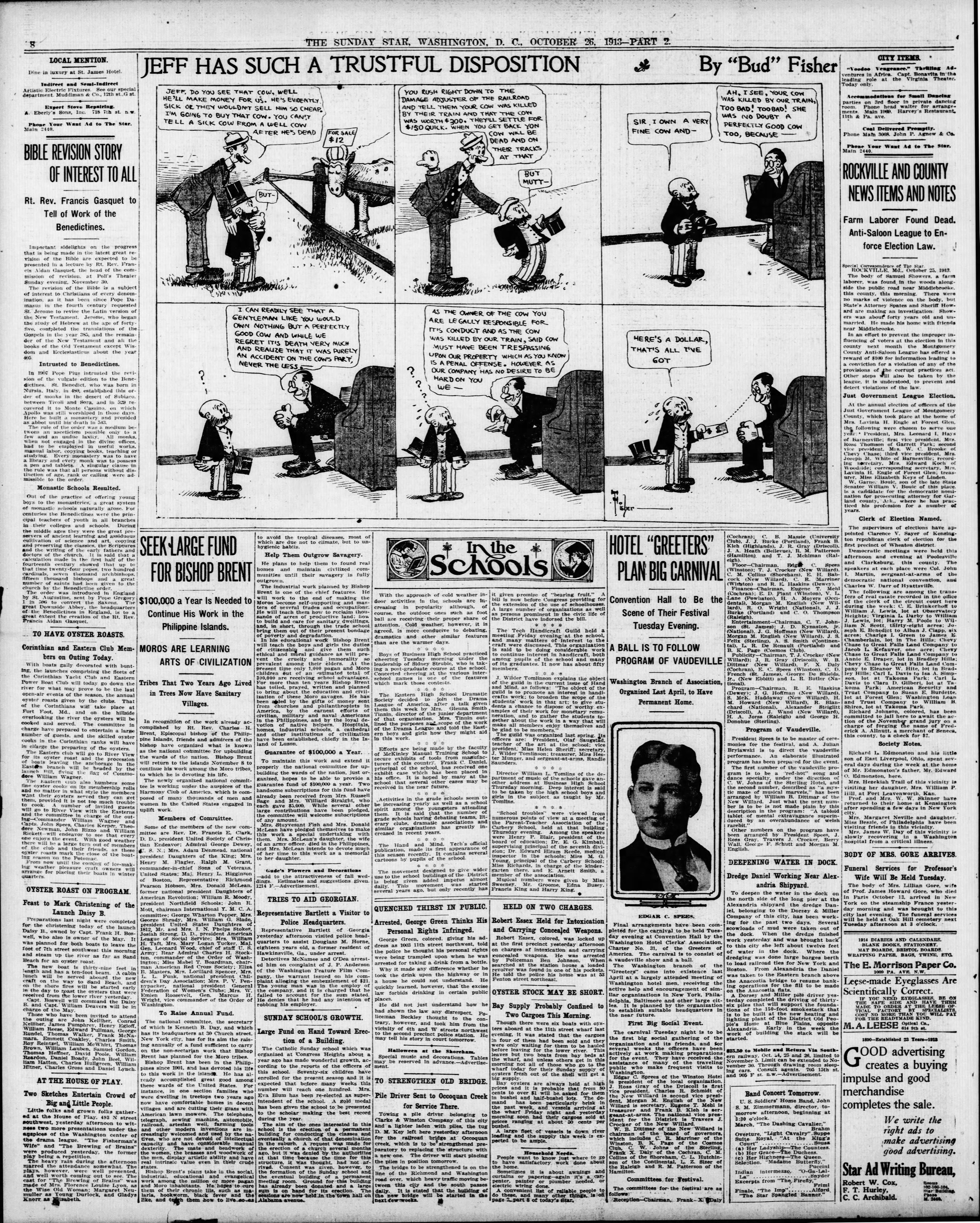
Corinthian and Eastern Club Members on Outing Today
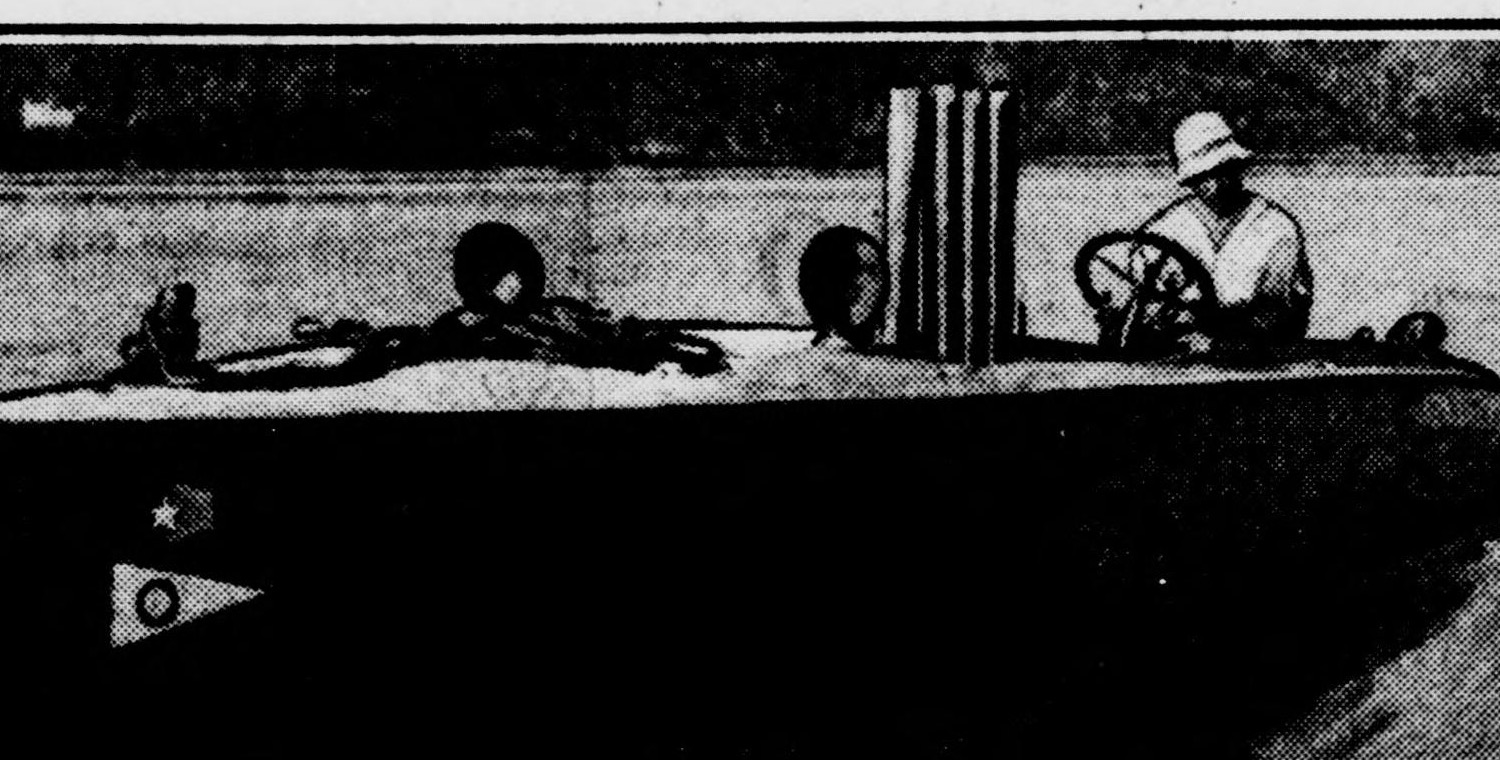
An end-of-season scene: the launches of the Eastern Power Boat Club and the Corinthian Yacht Club, decked with bunting, heading down the river for their annual oyster roasts. The club’s fleet ran to River View, the procession led by the launch flying the flag of Commodore William Wagner.
View the full clipping
King Speed to Reign on River
A preview of the big Potomac regatta that turns into a love letter to the original Gray Bat. Fifteen years earlier, the writer recalls, Battenfield’s first Gray Bat “threw” the biggest rollers on the river, and every kid at the swimming holes along the Eastern Branch, Rutman’s beach, the Coal Chute, Ant beach, Glass beach, the Gas House Wharves, would beat it for deep water to “ride” the boat’s wake.
View the full page at the Library of CongressBoathouse Row, on the record
The historians have taken up Boathouse Row too. In this talk for the George Washington University Museum’s D.C. Mondays series, Anne Brockett, an architectural historian at the DC Historic Preservation Office, tells the story of the four Anacostia boat clubs: the love of the river they share, the forced moves and hard weather they have come through, and the care for the community and the Anacostia they have practiced all along.
Further reading
- Boathouse Row: DC’s History Seen from the Anacostia Anne Brockett’s October 2024 lecture for the Ruth Ann Overbeck Capitol Hill History Project.
- Historic Boat Clubs of the Anacostia A piece by Liv Eaton for Evolution D.C., a project of the George Washington University Museum.
Books on the Anacostia itself have moved to the reading list on the River Stewardship page.
Honoring those who came before
We remember the past leaders and officers whose dedication built and sustained this club across more than a hundred years on the water.
Commodore, 1970s to the 2000s
J.R. Taylor (Lloyd Taylor, Jr.)
For roughly three decades, from the 1970s into the 2000s, the club was led by Commodore J.R. Taylor. He was a fine leader, and the club prospered under him. The membership in those years ran the full range of the city, from tradesmen to White House executive staff to several sitting members of Congress.
Read his obituaryWe also remember
- Tom Speight Past Commodore2013
- Rick Greene Past Commodore2022
- Bob Currie Past Secretary and Treasurer2023
An ardent fisherman and lifelong boating enthusiast, as happy working on a boat as running one.
- Tom Johnson Past Commodore2024
He brought his boat up from Florida and found both harbor and friendship on the Anacostia, then took the helm as the club’s elected commodore.
- Eric Cloud Past Secretary and Trustee2024
- Charles “Chip” Taylor Past Measurer2025
A member of the club for more than thirty-five years, he served as its measurer for most of that time.
Listed by the year they passed. Links open each member’s obituary or memorial.
Have a photo, a document, or a memory?
The club holds a deep archive of early-1900s photographs, clippings, rosters, and records, and there is always more of the story to gather. If you have something to add, we would love to hear from you.